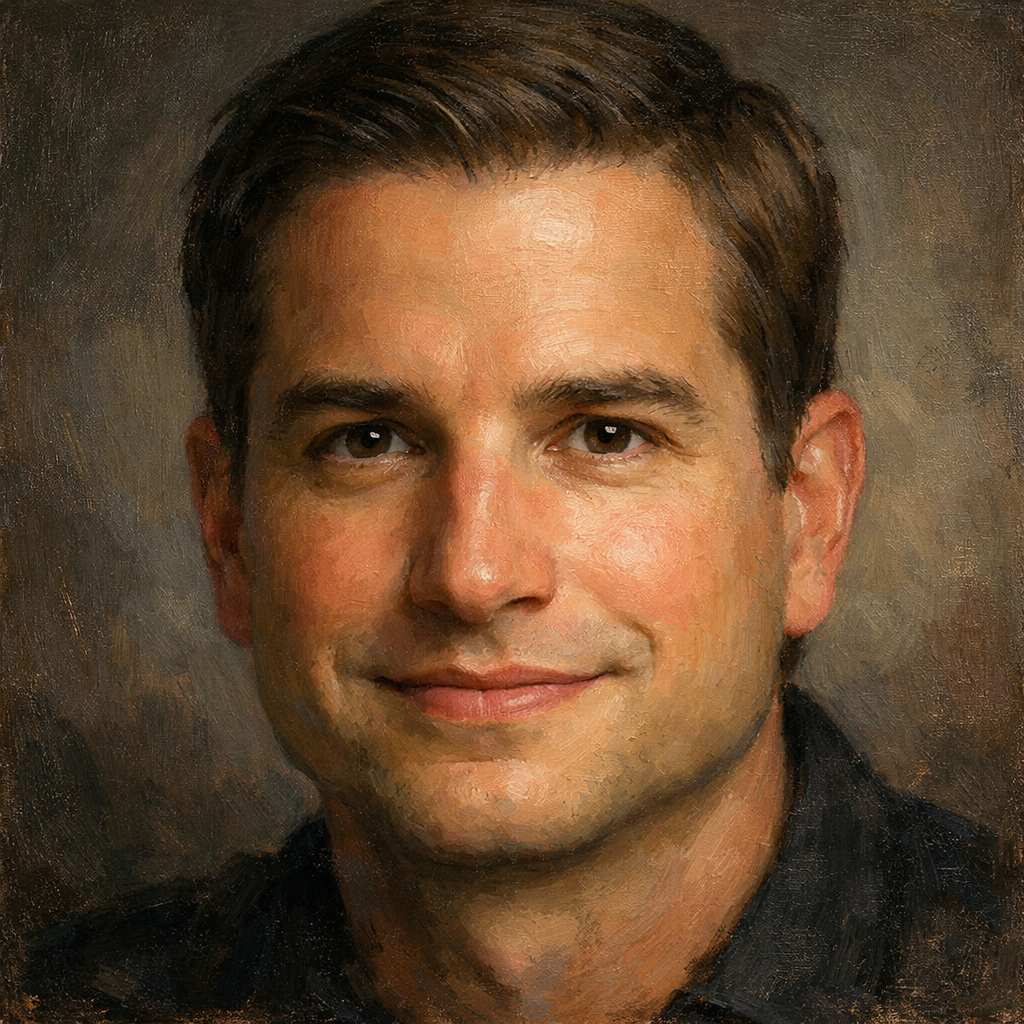
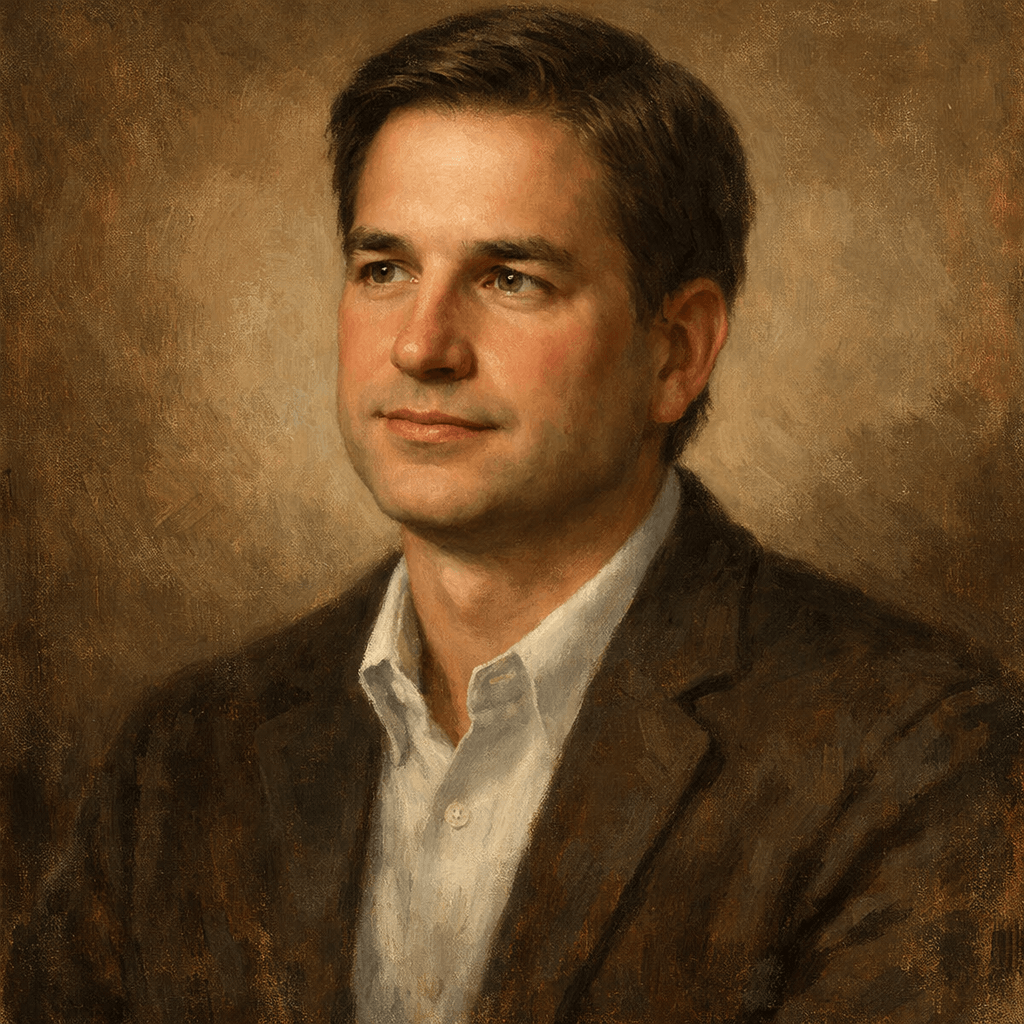
About Cal Newport
Cal Newport, born on October 16, 1978, in the United States, is a computer science professor at Georgetown University and a renowned author, speaker, and blogger. Best known for his expertise on productivity, work-life balance, and the impact of technology on human potential, Newport has reshaped modern discourse on meaningful work. His seminal works include Deep Work: Rules for Focused Success in a Distracted World (2016), Digital Minimalism: Choosing a Focused Life in a Noisy World (2019), and A World Without Email: Reclaiming Control of Your Work (and Life) (2023). Through his blog Study Hacks and the Deep Questions podcast, he challenges conventional wisdom, advocating for deliberate practice, intentional technology use, and career strategies rooted in long-term value over short-term gratification.
Newport’s contributions have positioned him as a leading voice in the “anti-distracted” movement, emphasizing the importance of sustained focus, digital minimalism, and rethinking workplace norms. His ideas have influenced professionals, educators, and students globally, offering actionable frameworks to navigate the challenges of the attention economy. In an era defined by constant connectivity, his work underscores the enduring value of deep thinking, meaningful productivity, and crafting a life aligned with personal and professional fulfillment. His insights remain critically relevant as individuals and organizations seek to reclaim agency in an increasingly fragmented digital world.
150 Best Quotes by Cal Newport
In an era defined by distractions and fleeting trends, Cal Newport stands as a beacon of clarity and purpose. A computer science professor, bestselling author, and advocate for intentional living, Newport has spent years dissecting the science of focus, productivity, and meaningful work. His insights—honed through rigorous research and personal experimentation—have reshaped how millions approach their careers, relationships, and digital lives. From the transformative power of Deep Work to the liberating principles of Digital Minimalism, his writing cuts through noise to reveal timeless truths about living with focus and fulfillment.
This collection of 150 quotes distills decades of Newport’s wisdom into bite-sized, actionable reflections. Whether you’re seeking to master attention in a hyperconnected world, build lasting career capital, or cultivate creativity without burnout, these quotes span themes that resonate with anyone striving for depth in work and life. Each line is a invitation to rethink how you work, learn, connect, and grow. More than just words, they’re a roadmap for crafting a life anchored in purpose, productivity, and profound human connection. Dive in—and let Cal Newport’s ideas challenge, inspire, and redefine your path forward.
Table of Contents
- Deep Work and Focus
- Technology and Digital Minimalism
- Value and Career Capital
- Productivity and Goal Setting
- Education and Learning
- Attention and Distraction
- Work Ethic and Perseverance
- Creativity and Innovation
- Human Connection and Empathy
- Philosophy of Work and Life
- Conclusion
Deep Work and Focus
Cal Newport’s philosophy of deep work centers on the idea that sustained, distraction-free focus is the cornerstone of productivity, learning, and meaningful achievement. In a world saturated with digital noise, he argues that cultivating the ability to immerse oneself in challenging tasks without interruption is not just beneficial—it’s essential for thriving in the modern economy.
"To learn hard things quickly, you must focus intensely without distraction. To learn, in other words, is an act of deep work." - Cal Newport
"Human beings, it seems, are at their best when immersed deeply in something challenging." - Cal Newport
"Two Core Abilities for Thriving in the New Economy 1. The ability to quickly master hard things. 2. The ability to produce at an elite level, in terms of both quality and speed." - Cal Newport
Newport frames deep work not just as a method but as a foundational skill for intellectual and professional excellence.
"To build your working life around the experience of flow produced by deep work is a proven path to deep satisfaction." - Cal Newport
"To produce at your peak level you need to work for extended periods with full concentration on a single task free from distraction." - Cal Newport
"Deep Work: Professional activities performed in a state of distraction-free concentration that push your cognitive capabilities to their limit." - Cal Newport
"Deep work is necessary to wring every last drop of value out of your current intellectual capacity." - Cal Newport
These quotes underscore the transformative power of sustained focus, framing deep work as a competitive advantage in an economy that often prioritizes surface-level productivity over depth.
"The key to developing a deep work habit is to move beyond good intentions and add routines and rituals to your working life designed to minimize the amount of your limited willpower necessary to transition into and maintain a state of unbroken concentration." - Cal Newport
"Digital minimalists see new technologies as tools to be used to support things they deeply value – not as sources of value themselves." - Cal Newport
"Without this patient willingness to reject shiny new pursuits, you’ll derail your efforts before you acquire the capital you need." - Cal Newport
"The best students understood the role intensity plays in productivity and therefore went out of their way to maximize their concentration." - Cal Newport
Here, Newport critiques the overreliance on digital tools and emphasizes the need for deliberate, intentional habits to sustain focus—a theme that recurs in his work on digital minimalism.
"To learn hard things quickly, you must focus intensely without distraction." - Cal Newport
"To produce at your peak level you need to work for extended periods with full concentration on a single task free from distraction." - Cal Newport
"Deep Work: Professional activities performed in a state of distraction-free concentration that push your cognitive capabilities to their limit." - Cal Newport
"First, distraction remains a destroyer of depth." - Cal Newport
These final quotes reinforce the central tenet of deep work: that distraction is not just a hindrance but a fundamental threat to the kind of focused, high-quality output that defines meaningful professional success.
Technology and Digital Minimalism
Cal Newport’s philosophy of Digital Minimalism challenges the chaotic overreliance on technology, advocating instead for intentional, value-driven use of digital tools. He argues that true connection, creativity, and autonomy are stifled by the attention economy—and that reclaiming our time requires rebuilding our relationship with technology from the ground up. Below are 15 of his most compelling quotes on this theme.
"Digital minimalism definitively does not reject the innovations of the internet age, but instead rejects the way so many people currently engage with these tools." - Cal Newport
"The more time you spend 'connecting' on these services, the more isolated you’re likely to become." - Cal Newport
"Our sociality is simply too complex to be outsourced to a social network or reduced to instant messages and emojis." - Cal Newport
Newport’s early quotes lay the foundation: digital minimalism isn’t about rejecting technology, but rejecting its mindless integration into our lives.
"To reestablish control, we need to move beyond tweaks and instead rebuild our relationship with technology from scratch." - Cal Newport
"If you’re wearing headphones, or monitoring a text message chain, or, God forbid, narrating the stroll on Instagram – you’re not really walking, and therefore you’re not going to experience this practice’s greatest benefits." - Cal Newport
"The tycoons of social media have to stop pretending that they’re friendly nerd gods building a better world and admit they’re just tobacco farmers in T-shirts selling an addictive product to children." - Cal Newport
Here, he emphasizes the need for radical rethinking and exposes the manipulative design of platforms that exploit human psychology.
"Simply put, humans are not wired to be constantly wired." - Cal Newport
"Digital Minimalism A philosophy of technology use in which you focus your online time on a small number of carefully selected and optimized activities that strongly support things you value." - Cal Newport
"Don’t follow your passion; rather, let it follow you in your quest to become, in the words of my favorite Steve Martin quote, 'so good that they can’t ignore you.'" - Cal Newport
Newport’s core principles emerge: prioritize deep work, align tech with values, and reject the myth of instant gratification.
"But part of what makes social media insidious is that the companies that profit from your attention have succeeded with a masterful marketing coup." - Cal Newport
"You cannot expect an app dreamed up in a dorm room, or among the Ping-Pong tables of a Silicon Valley incubator, to successfully replace the types of rich interactions to which we’ve painstakingly adapted over millennia." - Cal Newport
"Giving students iPads or allowing them to film homework assignments on YouTube prepares them for a high-tech economy about as much as playing with Hot Wheels would prepare them to thrive as auto mechanics." - Cal Newport
These quotes critique the false promises of tech as a panacea, highlighting how it often undermines meaningful human development.
"The curmudgeons among us are vaguely uneasy about the attention people pay to their phones." - Cal Newport
"Outsourcing your autonomy to an attention economy conglomerate – as you do when you mindlessly sign up for whatever new hot service emerges from the Silicon Valley venture capitalist class – is the opposite of freedom." - Cal Newport
"Digital minimalists see new technologies as tools to be used to support things they deeply value." - Cal Newport
Newport’s final trio underscores the tension between convenience and agency, urging a return to tech as a servant, not a master.
Value and Career Capital
Cal Newport's philosophy emphasizes that true professional fulfillment comes from building rare and valuable skills—what he calls "career capital." This approach challenges the conventional "follow your passion" narrative, instead advocating for a focus on offering value through deep expertise.
"Money is a neutral indicator of value. By aiming to make money, you're aiming to be valuable." - Cal Newport
"The things that make a great job great...are rare and valuable. If you want them in your working life, you need something rare and valuable to offer in return." - Cal Newport
"If your goal is to love what you do, you must first build up “career capital” by mastering rare and valuable skills." - Cal Newport
These quotes establish Newport's core argument: value isn't about passion, but about offering skills that are both rare and valuable.
"Money is a neutral indicator of value. By aiming to make money, you’re aiming to be valuable." - Cal Newport
"If you want a great job, you need something of great value to offer in return." - Cal Newport
"Getting to the cutting edge of a field can be understood in these terms: This process builds up rare and valuable skills and therefore builds up your store of career capital." - Cal Newport
"Spend enough time in a state of frenetic shallowness and you permanently reduce your capacity to perform deep work." - Cal Newport
Here, Newport reinforces that career capital is built through deep engagement with a field, pushing beyond surface-level understanding.
"Don’t follow your passion; rather, let it follow you in your quest to become, in the words of my favorite Steve Martin quote, “so good that they can’t ignore you.”" - Cal Newport
"When deciding whether to follow an appealing pursuit that will introduce more control into your work life, seek evidence of whether people are willing to pay for it." - Cal Newport
"The passion hypothesis is not just wrong, it’s also dangerous." - Cal Newport
"If your goal is to love what you do, you must first build up “career capital” by mastering rare and valuable skills." - Cal Newport
This trio critiques the "follow your passion" mantra, urging instead a focus on skills that command value in the market.
"To remain valuable in our economy, therefore, you must master the art of quickly learning complicated things." - Cal Newport
"Whether you’re a writer, marketer, consultant, or lawyer: Your work is craft, and if you hone your ability and apply it with respect and care, then like the skilled wheelwright you can generate meaning in the daily efforts of your professional life." - Cal Newport
"Stop focusing on these little details, it told me. “Focus instead on becoming better.”" - Cal Newport
"I felt like I was stretching to convince the world that my work was interesting, yet no one cared." - Cal Newport
The final quotes reveal the dangers of seeking external validation, advocating instead for self-driven mastery and resilience.
Productivity and Goal Setting
Cal Newport’s philosophy on productivity and goal setting centers on intentional focus, strategic prioritization, and the rejection of superficial busyness. He argues that true success comes not from doing more, but from cultivating deep, undistracted work and aligning efforts with meaningful, long-term objectives. This section compiles his most compelling quotes on how to build a life of purpose through disciplined productivity.
"When you work, work hard. When you're done, be done." - Cal Newport
"The more you try to do, the less you actually accomplish." - Cal Newport
"The passion hypothesis is not just wrong, it’s also dangerous." - Cal Newport
These early quotes set the tone for Newport’s philosophy, emphasizing focused effort, the pitfalls of overcommitment, and the importance of choosing meaningful work over chasing fleeting passions.
"The Deep Work Hypothesis: The ability to perform deep work is becoming increasingly rare at exactly the same time it is becoming increasingly valuable in our economy." - Cal Newport
"If you want to win the war for attention, don’t try to say ‘no’ to the trivial distractions you find on the information smorgasbord; try to say ‘yes’ to the subject that arouses a terrifying longing." - Cal Newport
"What? You say that full energy given to those sixteen hours will lessen the value of the business eight? Not so. On the contrary, it will assuredly increase the value of the business eight." - Cal Newport
Here, Newport underscores the economic value of deep work and the need to proactively seek out meaningful challenges rather than merely rejecting distractions.
"Busyness as Proxy for Productivity: In the absence of clear indicators of what it means to be productive and valuable in their jobs, many knowledge workers turn back toward an industrial indicator of productivity: doing lots of stuff in a visible manner." - Cal Newport
"The premise of this chapter is that by cultivating a high-quality leisure life first, it will become easier to minimize low-quality digital diversions later." - Cal Newport
"Once you’ve identified these goals, list for each the two or three most important activities that help you satisfy the goal." - Cal Newport
"Your goal is not to stick to a given schedule at all costs; it’s instead to maintain, at all times, a thoughtful say in what you’re doing with your time going forward." - Cal Newport
These quotes highlight Newport's critique of superficial busyness and his advocacy for strategic goal-setting and intentional time management.
"The more you try to do, the less you actually accomplish." - Cal Newport
"You have to get good before you can expect good work." - Cal Newport
"Leave good evidence of yourself. Do good work." - Cal Newport
"Stop focusing on these little details, it told me. “Focus instead on becoming better.”" - Cal Newport
This cluster reinforces the idea that productivity isn't about multitasking but about refining skills, producing high-quality work, and maintaining a long-term growth mindset.
"Ericsson notes that for a novice, somewhere around an hour a day of intense concentration seems to be a limit, while for experts this number can expand to as many as four hours." - Cal Newport
Education and Learning
Cal Newport’s insights into education and learning emphasize the importance of deliberate practice, focus, and avoiding shallow tasks to achieve mastery. His quotes challenge conventional notions of productivity, advocating for deep, intentional study and the mastery of complex skills.
"How to study wisely: (1) don't skip classes; (2) study early in the day; (3) study in isolation; (4) keep your energy levels high; (5) actively recall the material and quiz yourself until you're completely satisfied." - Cal Newport
"Who you are, what you think, feel, and do, what you love – is the sum of what you focus on." - Cal Newport
"The key thing is to force yourself through the work, force the skills to come; that’s the hardest phase." - Cal Newport
Newport frames education as a discipline requiring rigor and self-awareness, with the first three quotes establishing a foundation of focus and perseverance.
"To remain valuable in our economy, therefore, you must master the art of quickly learning complicated things." - Cal Newport
"This focus on stretching your ability and receiving immediate feedback provides the core of a more universal principle." - Cal Newport
"If you service low-impact activities, therefore, you're taking away time you could be spending on higher-impact activities. It's a zero-sum game." - Cal Newport
"Why bother hiring a hotshot if the bulk of their time is spent doing administrative work?" - Cal Newport
These quotes critique modern work environments, emphasizing the need to prioritize tasks that foster growth and value.
"Human beings, it seems, are at their best when immersed deeply in something challenging." - Cal Newport
"With so little input from labor, the proportion of this wealth that flows back to the machine owners – in this case, the venture investors – is without precedent." - Cal Newport
"Shallow Work: Noncognitively demanding, logistical-style tasks, often performed while distracted." - Cal Newport
"As digital technology reduces the need for labor in many industries, the proportion of the rewards returned to those who own the intelligent machines is growing." - Cal Newport
Newport ties deep engagement to both personal fulfillment and economic trends, highlighting the risks of undervaluing focus.
"To remain valuable in our economy, therefore, you must master the art of quickly learning complicated things." - Cal Newport
"In hindsight, these observations are obvious. If life-transforming missions could be found with just a little navel-gazing and an optimistic attitude." - Cal Newport
"The superstar effect, in other words, has a broader application today than Rosen could have predicted thirty years ago." - Cal Newport
"Feynman was adamant in avoiding administrative duties because he knew they would only decrease his ability to do the one thing that mattered most in his professional life." - Cal Newport
These final reflections underscore the necessity of strategic focus and the dangers of distractions in both education and career advancement.
Attention and Distraction
Cal Newport’s philosophy on attention and distraction underscores the fragility of focus in an age of constant digital noise. He argues that our ability to engage in deep, meaningful work is eroded by the relentless pull of shallow tasks and distractions. His quotes reveal a clear urgency: to protect attention as a finite, vital resource.
"Less mental clutter means more mental resources available for deep thinking." - Cal Newport
"Spend enough time in a state of frenetic shallowness and you permanently reduce your capacity to perform deep work." - Cal Newport
"Solitude Deprivation A state in which you spend close to zero time alone with your own thoughts and free from input from other minds." - Cal Newport
Newport emphasizes that mental clarity and solitude are not luxuries—they’re foundational to cognitive depth and creativity.
"The curmudgeons among us are vaguely uneasy about the attention people pay to their phones." - Cal Newport
"You have a finite amount of willpower that becomes depleted as you use it." - Cal Newport
"You can’t, in other words, build a billion-dollar empire like Facebook if you’re wasting hours every day using a service like Facebook." - Cal Newport
"The key here isn’t to avoid or even to reduce the total amount of time you spend engaging in distracting behavior, but is instead to give yourself plenty of opportunities throughout your evening to resist switching to these distractions at the slightest hint of boredom." - Cal Newport
Here, Newport exposes the paradox of distraction: it robs us of willpower and productivity, yet its ubiquity makes it seem harmless—even necessary.
"The shallow work that increasingly dominates the time and attention of knowledge workers is less vital than it often seems in the moment." - Cal Newport
"A clean break is best." - Cal Newport
"If a young Steve Jobs had taken his own advice and decided to only pursue work he loved, we would probably find him today as one of the Los Altos Zen Center’s most popular teachers." - Cal Newport
"Ironically, jobs are actually easier to enjoy than free time, because like flow activities they have built-in goals, feedback rules, and challenges." - Cal Newport
Newport contrasts the fleeting satisfaction of shallow tasks with the enduring fulfillment of focused, purposeful work.
"There’s a gravity and sense of importance inherent in deep work – whether you’re Ric Furrer smithing a sword or a computer programmer optimizing an algorithm." - Cal Newport
"Solitude Deprivation A state in which you spend close to zero time alone with your own thoughts and free from input from other minds." - Cal Newport
"Your will, in other words, is not a manifestation of your character that you can deploy without limit; it’s instead like a muscle that tires." - Cal Newport
"First, distraction remains a destroyer of depth." - Cal Newport
Newport’s closing reflections reinforce the stakes: without deliberate boundaries against distraction, we risk losing the capacity for true depth—intellectual, emotional, and creative.
Work Ethic and Perseverance
Cal Newport’s philosophy on work ethic and perseverance centers on disciplined focus, strategic effort, and the courage to pursue mastery in a distracted world. He emphasizes that success is not about talent alone, but about sustained, purposeful action that prioritizes depth over breadth. His insights challenge modern workers to resist shallow distractions and instead cultivate habits that align with long-term goals.
"If you're not focusing on becoming so good they can't ignore you, you're going to be left behind." - Cal Newport
"If you don’t produce, you won’t thrive – no matter how skilled or talented you are." - Cal Newport
"Clarity about what matters provides clarity about what does not." - Cal Newport
Newport’s opening quotes underscore the necessity of producing tangible value and the power of clarity in defining priorities.
"The superstar effect, in other words, has a broader application today than Rosen could have predicted thirty years ago." - Cal Newport
"Hardness scares off the daydreamers and the timid, leaving more opportunity for those like us who are willing to take the time to carefully work out the best path forward and then confidently take action." - Cal Newport
"The important thing about little bets is that they’re bite-sized. You try one. It takes a few months at most. It either succeeds or fails, but either way you get important feedback to guide your next steps." - Cal Newport
"If your specialty is new – as mine is – and they can’t therefore find experts with an opinion on it either way, you’re going to have a real hard time keeping your position." - Cal Newport
These quotes highlight the intersection of perseverance and practicality, advocating for incremental progress and the courage to navigate uncharted fields.
"Shallow Work: Noncognitively demanding, logistical-style tasks, often performed while distracted." - Cal Newport
"The satisfactions of manifesting oneself concretely in the world through manual competence have been known to make a man quiet and easy." - Cal Newport
"Develop the habit of letting small bad things happen. If you don't, you will never find time for the life-changing big things." - Cal Newports
"Professorial E-mail Sorting: Do not reply to an e-mail message if any of the following applies: It’s ambiguous or otherwise makes it hard for you to generate a reasonable response." - Cal Newport
Newport’s focus on minimizing distractions and embracing depth is evident here, from defining shallow work to prioritizing meaningful over trivial tasks.
"If your specialty is new – as mine is – and they can’t therefore find experts with an opinion on it either way, you’re going to have a real hard time keeping your position." - Cal Newport
"In this new economy, three groups will have a particular advantage: those who can work well and creatively with intelligent machines." - Cal Newport
"All it takes is an ideology seductive enough to convince you to discard common sense." - Cal Newport
"By accepting an assistant position he threw himself into the center of the action, where he could find out how things actually work." - Cal Newport
These final quotes reveal the challenges of pioneering new fields, the importance of adapting to technological shifts, and the risks of abandoning rationality for fleeting trends.
Creativity and Innovation
Cal Newport’s philosophy on creativity and innovation centers on the power of deep focus, deliberate practice, and intentional engagement with the world. He argues that true innovation emerges not from chaotic distractions but from cultivated attention, thoughtful reflection, and a commitment to quality over convenience. His quotes illuminate how these principles shape the creative process and redefine what it means to innovate in a digital age.
"Face-to-face conversation is the most human--and humanizing--thing we do. Fully present to one another, we learn to listen. It's where we develop the capacity for empathy." - Cal Newport
"Like fingers pointing to the moon, other diverse disciplines from anthropology to education, behavioral economics to family counseling, similarly suggest that the skillful management of attention is the sine qua non of the good life." - Cal Newport
"Marcus Aurelius asked: 'You see how few things you have to do to live a satisfying and reverent life?'" - Cal Newport
Newport highlights how simplicity, human connection, and attention discipline form the bedrock of meaningful creativity.
"In the middle of a busy workday, or after a particularly trying morning of childcare, it’s tempting to crave the release of having nothing to do – whole blocks of time with no schedule, no expectations, and no activity beyond whatever seems to catch your attention in the moment." - Cal Newport
"Step 1: Decide What Capital Market You’re In For the sake of clarity, I will introduce some new terminology." - Cal Newport
"Leave good evidence of yourself. Do good work." - Cal Newport
The tension between structured effort and unstructured rest underscores his belief that creativity requires both rigor and freedom.
"As the author Tim Ferriss once wrote: 'Develop the habit of letting small bad things happen. If you don’t, you’ll never find time for the life-changing big things.'" - Cal Newport
"The Craftsman Approach to Tool Selection: Identify the core factors that determine success and happiness in your professional and personal life." - Cal Newport
"The premise of this chapter is that by cultivating a high-quality leisure life first, it will become easier to minimize low-quality digital diversions later." - Cal Newport
Newport emphasizes prioritization and tool selection as strategies to eliminate distractions and channel energy into impactful work.
"Three to four hours a day, five days a week, of uninterrupted and carefully directed concentration, it turns out, can produce a lot of valuable output." - Cal Newport
"This is what you should experience in your own pursuit of 'good.' If you’re not uncomfortable, then you’re probably stuck at an 'acceptable level.'" - Cal Newport
"The Deep Work Hypothesis: The ability to perform deep work is becoming increasingly rare at exactly the same time it is becoming increasingly valuable in our economy." - Cal Newport
Here, Newport underscores the rarity and transformative potential of sustained, undistracted focus in fostering innovation.
"Without this patient willingness to reject shiny new pursuits, you’ll derail your efforts before you acquire the capital you need." - Cal Newport
"To simply wait and be bored has become a novel experience in modern life." - Cal Newport
"To do it right, it is the most complicated thing I know how to make,' Furrer explains. 'And it’s that challenge that drives me." - Cal Newport
Newport’s quotes collectively reveal that creativity thrives not in chaos, but in the discipline to embrace discomfort, reject distractions, and commit to mastery.
Human Connection and Empathy
Cal Newport’s philosophy often intersects with the value of deep, intentional human interaction in a world dominated by distraction. He emphasizes that true connection and empathy emerge not from superficial digital engagement but from meaningful focus, craftsmanship, and purposeful work that aligns with one’s identity and community.
"To simply wait and be bored has become a novel experience in modern life, but from the perspective of concentration training, it’s incredibly valuable." - Cal Newport
"To have a mission is to have a unifying focus for your career." - Cal Newport
"Beautiful code is short and concise, so if you were to give that code to another programmer they would say, ‘oh, that’s well written code.’" - Cal Newport
"To maximize your chances of success, you should deploy small, concrete experiments that return concrete feedback." - Cal Newport
Newport’s focus on boredom, mission-driven work, and deliberate practice highlights how intentional focus fosters not just professional mastery but also the patience and clarity required for deeper human connections.
"A job... is a way to pay the bills, a career is a path towards increasingly better work, and a calling is work that’s an important part of your life and a vital part of your identity." - Cal Newport
"Leave good evidence of yourself. Do good work." - Cal Newport
"In this new economy, three groups will have a particular advantage: those who can work well and creatively with intelligent machines, those who are the best at what they do, and those with access to capital." - Cal Newport
"The Craftsman Approach to Tool Selection: Identify the core factors that determine success and happiness in your professional and personal life." - Cal Newport
By distinguishing between roles and identities, Newport underscores that meaningful work—whether as a calling or a craft—creates a foundation for authentic relationships built on shared values and mutual respect.
"Once you’ve identified these goals, list for each the two or three most important activities that help you satisfy the goal." - Cal Newport
"The respected New Yorker staff writer George Packer captured this fear well in an essay about why he does not tweet." - Cal Newport
"The satisfactions of manifesting oneself concretely in the world through manual competence have been known to make a man quiet and easy." - Cal Newport
"To build your working life around the experience of flow produced by deep work is a proven path to deep satisfaction." - Cal Newport
Newport critiques the noise of modern life, advocating instead for deliberate, focused action. This mindset aligns with empathy, as it prioritizes substance over surface-level interactions.
"If you spend too much time focusing on whether or not you’ve found your true calling, the question will be rendered moot when you find yourself out of work." - Cal Newport
"Ironically, jobs are actually easier to enjoy than free time, because like flow activities they have built-in goals, feedback rules, and challenges." - Cal Newport
"The Principle of Least Resistance, protected from scrutiny by the metric black hole, supports work cultures that save us from the short-term discomfort of concentration and planning." - Cal Newport
Newport’s warnings about overthinking purpose and the pitfalls of distraction culture reveal how clarity in work and life reduces friction in human relationships, enabling deeper, more empathetic engagement.
Philosophy of Work and Life
Cal Newport’s philosophy of work and life revolves around the tension between distraction and focus, and the deliberate cultivation of skills that create lasting value. He emphasizes the importance of deep work, clarity of purpose, and the rejection of superficial productivity to achieve both professional success and personal fulfillment.
"Shallow Work: Noncognitively demanding, logistical-style tasks, often performed while distracted. These efforts tend to not create much new value in the world and are easy to replicate." - Cal Newport
"Do What Steve Jobs Did, Not What He Said." - Cal Newport
"Deep work is so important that we might consider it, to use the phrasing of business writer Eric Barker, 'the superpower of the 21st century.'" - Cal Newport
"At the end of every week he prints his numbers to see how well he achieved this goal, and then uses this feedback to guide himself in the week ahead." - Cal Newport
Newport contrasts shallow work with deep work, advocating for structured feedback to refine one’s focus and output.
"Step 1: Decide What Capital Market You’re In For the sake of clarity, I will introduce some new terminology." - Cal Newport
"If you're not focusing on becoming so good they can't ignore you, you're going to be left behind." - Cal Newport
"If a young Steve Jobs had taken his own advice and decided to only pursue work he loved, we would probably find him today as one of the Los Altos Zen Center’s most popular teachers." - Cal Newport
"Clarity about what matters provides clarity about what does not." - Cal Newport
By framing career choices as participation in specific markets, Newport underscores the need for strategic clarity and competitive differentiation.
"The good news about deliberate practice is that it will push you past this plateau and into a realm where you have little competition." - Cal Newport
"Deep work is so important that we might consider it, to use the phrasing of business writer Eric Barker, 'the superpower of the 21st century.'" - Cal Newport
"If you go after more control in your working life without a rare and valuable skill to offer in return, you’re likely pursuing a mirage." - Cal Newport
"This focus on stretching your ability and receiving immediate feedback provides the core of a more universal principle." - Cal Newport
Newport ties the concept of deliberate practice to the necessity of rare skills, arguing that true autonomy stems from irreplaceable expertise.
"This, ultimately, is the lesson to come away with from our brief foray into the world of experimental psychology: To build your working life around the experience of flow produced by deep work is a proven path to deep satisfaction." - Cal Newport
"There is a middle ground, and if you’re interested in developing a deep work habit, you must fight to get there." - Cal Newport
"Pushing past what is comfortable, however is only one part of the deliberate-practice story." - Cal Newport
His reflections on flow and middle ground highlight the balance between discipline and adaptability in sustaining meaningful work.
Additional Quotes
"Who could justify trading a lifetime of stress and backbreaking labor for better blinds? Is a nicer-looking window treatment really worth so much of your life?" - Cal Newport
"Money is a neutral indicator of value. By aiming to make money, you're aiming to be valuable." - Cal Newport
"How to study wisely: (1) don't skip classes; (2) study early in the day; (3) study in isolation; (4) keep your energy levels high; (5) actively recall the material and quiz yourself until you're completely satisfied." - Cal Newport
"What's making us uncomfortable...is this feeling of losing control - a feeling that instantiates itself in a dozen different ways each day, such as when we tune out with our phone during our child's bath time, or lose our ability to enjoy a nice moment without a frantic urge to document it for a virtual audience." - Cal Newport
"A better strategy for shifting other’s expectations about your work is to consistently deliver what you promise instead of consistently explaining how you’re working." - Cal Newport
"Digital minimalism definitively does not reject the innovations of the internet age, but instead rejects the way so many people currently engage with these tools." - Cal Newport
"The things that make a great job great...are rare and valuable. If you want them in your working life, you need something rare and valuable to offer in return In other words, you need to be good at something before you can expect to get a good job." - Cal Newport
"The thought process that went into building these applications, Facebook being the first of them, . . . was all about: “How do we consume as much of your time and conscious attention as possible?” And that means that we need to sort of give you a little dopamine hit every once in a while, because someone liked or commented on a photo or a post or whatever." - Cal Newport
"Start small and start immediately." - Cal Newport
"If you want a great job, you need something of great value to offer in return." - Cal Newport
"If you service low-impact activities, therefore, you're taking away time you could be spending on higher-impact activities. It's a zero-sum game." - Cal Newport
"Face-to-face conversation is the most human--and humanizing--thing we do. Fully present to one another, we learn to listen. It's where we develop the capacity for empathy. It's where we experience the joy of being heard, of being understood." - Cal Newport
"Develop the habit of letting small bad things happen. If you don't, you will never find time for the life-changing big things- Tim Ferriss" - Cal Newport
"… a better objective for support units would be the following: to effectively fulfill their administrative duties with as small an impact as possible on the specialists’ main work obligations. If taken seriously this metric might mean a given support unit needs to make its own work less efficient to better serve the organization." - Cal Newport
"Why bother hiring a hotshot if the bulk of their time is spent doing administrative work?" - Cal Newport
"When you work, work hard. When you're done, be done." - Cal Newport
"Two roads diverged in a yellow wood," and one traveler chose the path to mastery while the other was called toward passion's glow. The former ended up celebrated in the industry, in control of his own livelihood, and weekending with his family in a forested retreat. The latter ended up on food stamps." - Cal Newport
"If you're not focusing on becoming so good they can't ignore you, you're going to be left behind. This clarity is refreshing. It tells you to stop worrying about what your job offers you, and instead worry about what you're offering the world. This mindset–which I call the craftsman mindset-allows you to sidestep the anxious questions generated by the passion hypothesis—"Who am I?", "What do I truly love?"—and instead put your head down and focus on becoming valuable." - Cal Newport
"As the author Tim Ferriss once wrote: “Develop the habit of letting small bad things happen. If you don’t, you’ll never find time for the life-changing big things." - Cal Newport
"Getting to the cutting edge of a field can be understood in these terms: This process builds up rare and valuable skills and therefore builds up your store of career capital. Similarly, identifying a compelling mission once you get to the cutting edge can be seen as investing your career capital to acquire a desirable trait in your career. In other words, mission is yet another example of career capital theory in action. If you want a mission, you need to first acquire capital." - Cal Newport
"There’s a gravity and sense of importance inherent in deep work – whether you’re Ric Furrer smithing a sword or a computer programmer optimizing an algorithm. Gallagher’s theory, therefore, predicts that if you spend enough time in this state, your mind will understand your world as rich in meaning and importance." - Cal Newport
"Once you’ve identified these goals, list for each the two or three most important activities that help you satisfy the goal. These activities should be specific enough to allow you to clearly picture doing them. On the other hand, they should be general enough." - Cal Newport
"Who you are, what you think, feel, and do, what you love – is the sum of what you focus on." - Cal Newport
"Professorial E-mail Sorting: Do not reply to an e-mail message if any of the following applies: It’s ambiguous or otherwise makes it hard for you to generate a reasonable response. It’s not a question or proposal that interests you. Nothing really good would happen if you did respond and nothing really bad would happen if you didn’t." - Cal Newport
"The respected New Yorker staff writer George Packer captured this fear well in an essay about why he does not tweet: “Twitter is crack for media addicts. It scares me, not because I’m morally superior to it, but because I don’t think I could handle it. I’m afraid I’d end up letting my son go hungry." - Cal Newport
"If you don’t produce, you won’t thrive – no matter how skilled or talented you are." - Cal Newport
"If your specialty is new – as mine is – and they can’t therefore find experts with an opinion on it either way, you’re going to have a real hard time keeping your position, as there’s no one out there to validate your stature." - Cal Newport
"If a young Steve Jobs had taken his own advice and decided to only pursue work he loved, we would probably find him today as one of the Los Altos Zen Center’s most popular teachers." - Cal Newport
"Human beings, it seems, are at their best when immersed deeply in something challenging. There." - Cal Newport
"In the middle of a busy workday, or after a particularly trying morning of childcare, it’s tempting to crave the release of having nothing to do – whole blocks of time with no schedule, no expectations, and no activity beyond whatever seems to catch your attention in the moment. These decompression sessions have their place, but their rewards are muted, as they tend to devolve toward low-quality activities like mindless phone swiping and half-hearted binge-watching." - Cal Newport
"Two Core Abilities for Thriving in the New Economy 1. The ability to quickly master hard things. 2. The ability to produce at an elite level, in terms of both quality and speed." - Cal Newport
"Rosen explains as follows: “Hearing a succession of mediocre singers does not add up to a single outstanding performance.” In other words, talent is not a commodity you can buy in bulk and combine to reach the needed levels: There’s a premium to being the best. Therefore, if you’re in a marketplace where the consumer has access to all performers, and everyone’s q value is clear, the consumer will choose the very best." - Cal Newport
"What’s making us uncomfortable... is this feeling of losing control – a feeling that instantiates itself in a dozen different ways each day, such as when we tune out with our phone during our child’s bath time, or lose our ability to enjoy a nice moment without a frantic urge to document it for a virtual audience." - Cal Newport
"Deliberate practice is often the opposite of enjoyable." - Cal Newport
"It’s now possible to completely banish solitude from your life. Thoreau and Storr worried about people enjoying less solitude. We must now wonder if people might forget this state of being altogether." - Cal Newport
"Less mental clutter means more mental resources available for deep thinking." - Cal Newport
"All the people I ever admired and respected led balanced lives – studying hard, partying hard, as well as being involved in activities and getting a decent amount of sleep each night. I really think this is the only logically defensible way of doing things.” Chris, a straight-A college student." - Cal Newport
"To simply wait and be bored has become a novel experience in modern life, but from the perspective of concentration training, it’s incredibly valuable." - Cal Newport
"Your goal is not to stick to a given schedule at all costs; it’s instead to maintain, at all times, a thoughtful say in what you’re doing with your time going forward – even." - Cal Newport
"In this new economy, three groups will have a particular advantage: those who can work well and creatively with intelligent machines, those who are the best at what they do, and those with access to capital." - Cal Newport
"Digital Minimalism A philosophy of technology use in which you focus your online time on a small number of carefully selected and optimized activities that strongly support things you value, and then happily miss out on everything else." - Cal Newport
"The Craftsman Approach to Tool Selection: Identify the core factors that determine success and happiness in your professional and personal life. Adopt a tool only if its positive impacts on these factors substantially outweigh its negative impacts. Notice." - Cal Newport
"Busyness as Proxy for Productivity: In the absence of clear indicators of what it means to be productive and valuable in their jobs, many knowledge workers turn back toward an industrial indicator of productivity: doing lots of stuff in a visible manner." - Cal Newport
"With so little input from labor, the proportion of this wealth that flows back to the machine owners – in this case, the venture investors – is without precedent. It’s no wonder that a venture capitalist I interviewed for my last book admitted to me with some concern, “Everyone wants my job." - Cal Newport
"The premise of this chapter is that by cultivating a high-quality leisure life first, it will become easier to minimize low-quality digital diversions later." - Cal Newport
"Step 1: Decide What Capital Market You’re In For the sake of clarity, I will introduce some new terminology. When you are acquiring career capital in a field, you can imagine that you are acquiring this capital in a specific type of career capital market. There are two types of these markets: winner-take-all and auction. In a winner-take-all market, there is only one type of career capital available, and lots of different people competing for it." - Cal Newport
"Clarity about what matters provides clarity about what does not." - Cal Newport
"Shallow Work: Noncognitively demanding, logistical-style tasks, often performed while distracted. These efforts tend to not create much new value in the world and are easy to replicate." - Cal Newport
"The satisfactions of manifesting oneself concretely in the world through manual competence have been known to make a man quiet and easy,” explains Matthew Crawford." - Cal Newport
"To build your working life around the experience of flow produced by deep work is a proven path to deep satisfaction. A." - Cal Newport
"Spend enough time in a state of frenetic shallowness and you permanently reduce your capacity to perform deep work." - Cal Newport
"Three to four hours a day, five days a week, of uninterrupted and carefully directed concentration, it turns out, can produce a lot of valuable output." - Cal Newport
"Do What Steve Jobs Did, Not What He Said." - Cal Newport
"Don’t follow your passion; rather, let it follow you in your quest to become, in the words of my favorite Steve Martin quote, “so good that they can’t ignore you." - Cal Newport
"The more you try to do, the less you actually accomplish.” They elaborate that execution should be aimed at a small number of “wildly important goals.” This." - Cal Newport
"Solitude Deprivation A state in which you spend close to zero time alone with your own thoughts and free from input from other minds." - Cal Newport
"When deciding whether to follow an appealing pursuit that will introduce more control into your work life, seek evidence of whether people are willing to pay for it. If you find this evidence, continue. If not, move on." - Cal Newport
"This is what you should experience in your own pursuit of “good.” If you’re not uncomfortable, then you’re probably stuck at an “acceptable level." - Cal Newport
"To produce at your peak level you need to work for extended periods with full concentration on a single task free from distraction. Put another way, the type of work that optimizes your performance is deep work." - Cal Newport
"I have been a happy man ever since January 1, 1990, when I no longer had an email address. I’d used email since about 1975, and it seems to me that 15 years of email is plenty for one lifetime. Email is a wonderful thing for people whose role in life is to be on top of things. But not for me; my role is to be on the bottom of things. What I do takes long hours of studying and uninterruptible concentration. Knuth." - Cal Newport
"If you spend too much time focusing on whether or not you’ve found your true calling, the question will be rendered moot when you find yourself out of work." - Cal Newport
"But part of what makes social media insidious is that the companies that profit from your attention have succeeded with a masterful marking coup: convincing our culture that if you don’t use their products you might miss out." - Cal Newport
"Ironically, jobs are actually easier to enjoy than free time, because like flow activities they have built-in goals, feedback rules, and challenges, all of which encourage one to become involved in one’s work, to concentrate and lose oneself in it. Free time, on the other hand, is unstructured, and requires much greater effort to be shaped into something that can be enjoyed." - Cal Newport
"You have to get good before you can expect good work. As." - Cal Newport
"All it takes is an ideology seductive enough to convince you to discard common sense." - Cal Newport
"The good news about deliberate practice is that it will push you past this plateau and into a realm where you have little competition." - Cal Newport
"As digital technology reduces the need for labor in many industries, the proportion of the rewards returned to those who own the intelligent machines is growing. A venture capitalist in today’s economy can fund a company like Instagram, which was eventually sold for a billion dollars, while employing only thirteen people. When else in history could such a small amount of labor be involved in such a large amount of value?" - Cal Newport
"Your will, in other words, is not a manifestation of your character that you can deploy without limit; it’s instead like a muscle that tires." - Cal Newport
"The Deep Work Hypothesis: The ability to perform deep work is becoming increasingly rare at exactly the same time it is becoming increasingly valuable in our economy. As a consequence, the few who cultivate this skill, and then make it the core of their working life, will thrive." - Cal Newport
"If you’re not uncomfortable, then you’re probably stuck at an “acceptable level." - Cal Newport
"To remain valuable in our economy, therefore, you must master the art of quickly learning complicated things." - Cal Newport
"Deep work is so important that we might consider it, to use the phrasing of business writer Eric Barker, “the superpower of the 21st century." - Cal Newport
"Without this patient willingness to reject shiny new pursuits, you’ll derail your efforts before you acquire the capital you need." - Cal Newport
"The passion hypothesis is not just wrong, it’s also dangerous. Telling someone to “follow their passion” is not just an act of innocent optimism, but potentially the foundation for a career riddled with confusion and angst." - Cal Newport
"If you go after more control in your working life without a rare and valuable skill to offer in return, you’re likely pursuing a mirage." - Cal Newport
"This focus on stretching your ability and receiving immediate feedback provides the core of a more universal principle – one that I increasingly came to believe provides the key to successfully acquiring career capital in almost any field." - Cal Newport
"Marcus Aurelius asked: “You see how few things you have to do to live a satisfying and reverent life?" - Cal Newport
"Deep Work: Professional activities performed in a state of distraction-free concentration that push your cognitive capabilities to their limit. These efforts create new value, improve your skill, and are hard to replicate." - Cal Newport
"In hindsight, these observations are obvious. If life-transforming missions could be found with just a little navel-gazing and an optimistic attitude, changing the world would be commonplace. But it’s not commonplace; it’s instead quite rare. This rareness, we now understand, is because these breakthroughs require that you first get to the cutting edge, and this is hard – the type of hardness that most of us try to avoid in our working lives. The." - Cal Newport
"Leave good evidence of yourself. Do good work." - Cal Newport
"If your goal is to love what you do, you must first build up “career capital” by mastering rare and valuable skills, and then cash in this capital for the traits that define great work." - Cal Newport
"To remain valuable in our economy, therefore, you must master the art of quickly learning complicated things. This task requires deep work. If you don’t cultivate this ability, you’re likely to fall behind as technology advances. The." - Cal Newport
"The superstar effect, in other words, has a broader application today than Rosen could have predicted thirty years ago. An increasing number of individuals in our economy are now competing with the rock stars of their sectors." - Cal Newport
"This, ultimately, is the lesson to come away with from our brief foray into the world of experimental psychology: To build your working life around the experience of flow produced by deep work is a proven path to deep satisfaction." - Cal Newport
"You cannot expect an app dreamed up in a dorm room, or among the Ping-Pong tables of a Silicon Valley incubator, to successfully replace the types of rich interactions to which we’ve painstakingly adapted over millennia. Our sociality is simply too complex to be outsourced to a social network or reduced to instant messages and emojis." - Cal Newport
"Whether you’re a writer, marketer, consultant, or lawyer: Your work is craft, and if you hone your ability and apply it with respect and care, then like the skilled wheelwright you can generate meaning in the daily efforts of your professional life." - Cal Newport
"Stop focusing on these little details,” it told me. “Focus instead on becoming better." - Cal Newport
"Ericsson notes that for a novice, somewhere around an hour a day of intense concentration seems to be a limit, while for experts this number can expand to as many as four hours – but rarely more." - Cal Newport
"I felt like I was stretching to convince the world that my work was interesting, yet no one cared." - Cal Newport
"There is a middle ground, and if you’re interested in developing a deep work habit, you must fight to get there." - Cal Newport
"In Part 1, I quoted writer Winifred Gallagher saying, “I’ll live the focused life, because it’s the best kind there is.” I agree. So does Bill Gates. And hopefully now that you’ve finished this book, you agree too." - Cal Newport
"Giving students iPads or allowing them to film homework assignments on YouTube prepares them for a high-tech economy about as much as playing with Hot Wheels would prepare them to thrive as auto mechanics." - Cal Newport
"Feynman was adamant in avoiding administrative duties because he knew they would only decrease his ability to do the one thing that mattered most in his professional life: “to do real good physics work." - Cal Newport
"First, distraction remains a destroyer of depth." - Cal Newport
"The task of a craftsman, they conclude, “is not to generate meaning, but rather to cultivate in himself the skill of discerning the meanings that are already there." - Cal Newport
"Pushing past what is comfortable, however is only one part of the deliberate-practice story; the other part is embracing honest feedback – even if it destroys what you thought was good." - Cal Newport
"A side effect of memory training, in other words, is an improvement in your general ability to concentrate. This ability can then be fruitfully applied to any task demanding deep work." - Cal Newport
"The curmudgeons among us are vaguely uneasy about the attention people pay to their phones, and pine for the days of unhurried concentration, while the digital hipsters equate such nostalgia with Luddism and boredom, and believe that increased connection is the foundation for a utopian future." - Cal Newport
"Digital minimalists see new technologies as tools to be used to support things they deeply value – not as sources of value themselves. They don’t accept the idea that offering some small benefit is justification for allowing an attention-gobbling service into their lives, and are instead interested in applying new technology in highly selective and intentional ways that yield big wins. Just as important: they’re comfortable missing out on everything else." - Cal Newport
"Outsourcing your autonomy to an attention economy conglomerate – as you do when you mindlessly sign up for whatever new hot service emerges from the Silicon Valley venture capitalist class – is the opposite of freedom, and will likely degrade your individuality." - Cal Newport
"To do it right, it is the most complicated thing I know how to make,” Furrer explains. “And it’s that challenge that drives me. I don’t need a sword. But I have to make them." - Cal Newport
"The Principle of Least Resistance, protected from scrutiny by the metric black hole, supports work cultures that save us from the short-term discomfort of concentration and planning, at the expense of long-term satisfaction and the production of real value." - Cal Newport
"By accepting an assistant position he threw himself into the center of the action, where he could find out how things actually work." - Cal Newport
"The best students understood the role intensity plays in productivity and therefore went out of their way to maximize their concentration – radically reducing the time required to prepare for tests or write papers, without diminishing the quality of their results." - Cal Newport
"Here’s a case where someone successfully followed their passion,” they say, “therefore ‘follow your passion’ must be good advice.” This is faulty logic. Observing a few instances of a strategy working does not make it universally effective." - Cal Newport
"The use of network tools can be harmful. If you don’t attempt to weigh pros against cons, but instead use any glimpse of some potential benefit as justification for unrestrained use of a tool, then you’re unwittingly crippling your ability to succeed in the world of knowledge work. This." - Cal Newport
"The tycoons of social media have to stop pretending that they’re friendly nerd gods building a better world and admit they’re just tobacco farmers in T-shirts selling an addictive product to children. Because, let’s face it, checking your “likes” is the new smoking." - Cal Newport
"The things that make a great job great... are rare and valuable. If you want them in your working life, you need something rare and valuable to offer in return In other words, you need to be good at something before you can expect to get a good job." - Cal Newport
"A good career mission is similar to a scientific breakthrough – it’s an innovation waiting to be discovered in the adjacent possible of your field. If you want to identify a mission for your working life, therefore, you must first get to the cutting edge – the only place where these missions become visible. This." - Cal Newport
"If you want to win the war for attention, don’t try to say ‘no’ to the trivial distractions you find on the information smorgasbord; try to say ‘yes’ to the subject that arouses a terrifying longing, and let the terrifying longing crowd out everything else.” For." - Cal Newport
"Decades of work from multiple different subfields within psychology all point toward the conclusion that regularly resting your brain improves the quality of your deep work. When you work, work hard. When you’re done, be done. Your average e-mail response time might suffer some, but you’ll more than make up for this with the sheer volume of truly important work produced during the day by your refreshed ability to dive deeper than your exhausted peers." - Cal Newport
"How do people end up loving what they do?" - Cal Newport
"To maximize your chances of success, you should deploy small, concrete experiments that return concrete feedback." - Cal Newport
"Think Small, Act Big.” It’s in this understanding of career capital and its role in mission that we get our explanation for this title. Advancing to the cutting edge in a field is an act of “small” thinking, requiring you to focus on a narrow collection of subjects for a potentially long time. Once you get to the cutting edge, however, and discover a mission in the adjacent possible, you must go after it with zeal: a “big” action." - Cal Newport
"First, when you focus only on what your work offers you, it makes you hyperaware of what you don’t like about it, leading to chronic unhappiness." - Cal Newport
"The urge to check Twitter or refresh Reddit becomes a nervous twitch that shatters uninterrupted time into shards too small to support the presence necessary for an intentional life." - Cal Newport
"A shutdown habit, therefore, is not necessarily reducing the amount of time you’re engaged in productive work, but is instead diversifying the type of work you deploy." - Cal Newport
"Beautiful code is short and concise, so if you were to give that code to another programmer they would say, “oh, that’s well written code.” It’s much like as if you were writing a poem." - Cal Newport
"Efforts to deepen your focus will struggle if you don’t simultaneously wean your mind from a dependence on distraction." - Cal Newport
"You’re either remarkable or invisible,” says Seth Godin in his 2002 bestseller, Purple Cow." - Cal Newport
"In Ericsson’s seminal 1993 paper on the topic, titled “The Role of Deliberate Practice in the Acquisition of Expert Performance,” he dedicates a section to reviewing what the research literature reveals about an individual’s capacity for cognitively demanding work. Ericsson notes that for a novice, somewhere around an hour a day of intense concentration seems to be a limit, while for experts this number can expand to as many as four hours – but rarely more." - Cal Newport
"The sugar high of convenience is fleeting and the sting of missing out dulls rapidly, but the meaningful glow that comes from taking charge of what claims your time and attention is something that persists." - Cal Newport
"A job... is a way to pay the bills, a career is a path towards increasingly better work, and a calling is work that’s an important part of your life and a vital part of your identity." - Cal Newport
"We didn’t sign up for the digital lives we now lead. They were instead, to a large extent, crafted in boardrooms to serve the interests of a select group of technology investors." - Cal Newport
"If you service low-impact activities, therefore, you’re taking away time you could be spending on higher-impact activities. It’s a zero-sum game." - Cal Newport
"Basic economic theory tells us that if you want something that’s both rare and valuable, you need something rare and valuable to offer in return – this is Supply and Demand 101." - Cal Newport
"He asks us to treat the minutes of our life as a concrete and valuable substance – arguably the most valuable substance we possess – and to always reckon with how much of this life we trade for the various activities we allow to claim our time." - Cal Newport
"Two roads diverged in a yellow wood,” and one traveler chose the path to mastery while the other was called toward passion’s glow." - Cal Newport
"Deep work is necessary to wring every last drop of value out of your current intellectual capacity." - Cal Newport
"Sertillanges argues that to advance your understanding of your field you must tackle the relevant topics systematically, allowing your “converging rays of attention” to uncover the truth latent in each. In other words, he teaches: To learn requires intense concentration." - Cal Newport
"Twitter is crack for media addicts." - Cal Newport
"Any pursuit – be it physical or cognitive – that supports high levels of skill can also generate a sense of sacredness." - Cal Newport
"Money is a neutral indicator of value. By aiming to make money, you’re aiming to be valuable." - Cal Newport
"We eagerly signed up for what Silicon Valley was selling, but soon realized that in doing so we were accidently degrading our humanity." - Cal Newport
"The key to developing a deep work habit is to move beyond good intentions and add routines and rituals to your working life designed to minimize the amount of your limited willpower necessary to transition into and maintain a state of unbroken concentration." - Cal Newport
"Like fingers pointing to the moon, other diverse disciplines from anthropology to education, behavioral economics to family counseling, similarly suggest that the skillful management of attention is the sine qua non of the good life and the key to improving virtually every aspect of your experience." - Cal Newport
"We require a philosophy that puts our aspirations and values once again in charge of our daily experience, all the while dethroning primal whims and the business models of Silicon Valley from their current dominance of this role; a philosophy that accepts new technologies, but not if the price is the dehumanization Andrew Sullivan warned us about; a philosophy that prioritizes long-term meaning over short-term satisfaction." - Cal Newport
"Deep work is at a severe disadvantage in a technopoly because it builds on values like quality, craftsmanship, and mastery that are decidedly old-fashioned and nontechnological. Even worse, to support deep work often requires the rejection of much of what is new and high-tech." - Cal Newport
"In this second part, I introduce a framework I call attention capital theory that argues for creating workflows built around processes specifically designed to help us get the most out of our human brains while minimizing unnecessary miseries. This." - Cal Newport
"The key thing is to force yourself through the work, force the skills to come; that’s the hardest phase." - Cal Newport
"We like to think of innovation as striking us in a stunning eureka moment, where you all at once change the way people see the world, leaping far ahead of our current understanding. I’m arguing that in reality, innovation is more systematic." - Cal Newport
"All of humanity’s problems stem from man’s inability to sit quietly in a room alone,” Blaise Pascal famously wrote in the late seventeenth century." - Cal Newport
"If you’re not focusing on becoming so good they can’t ignore you, you’re going to be left behind." - Cal Newport
"If you can’t learn, you can’t thrive." - Cal Newport
"Our sociality is simply too complex to be outsourced to a social network or reduced to instant messages and emojis." - Cal Newport
"The important thing about little bets is that they’re bite-sized. You try one. It takes a few months at most. It either succeeds or fails, but either way you get important feedback to guide your next steps. This." - Cal Newport
"It is a lifetime accumulation of deliberate practice that again and again ends up explaining excellence." - Cal Newport
"Simply put, humans are not wired to be constantly wired." - Cal Newport
"The shallow work that increasingly dominates the time and attention of knowledge workers is less vital than it often seems in the moment." - Cal Newport
Conclusion
Cal Newport’s ideas have left an indelible mark on how we approach work, technology, and meaningful living. Through his books, essays, and the 150 quotes explored here, he has challenged the chaos of modern distractions and redefined success as a function of depth, purpose, and intentionality. His legacy lies not just in the concepts he popularized—like Deep Work or Digital Minimalism—but in the countless individuals who have transformed their lives by embracing his philosophy. Newport’s work is a clarion call to reclaim our time, focus, and humanity in an age that constantly threatens to fragment both.
The themes woven through his quotes—ranging from the power of sustained focus to the quiet revolution of career capital, from the dangers of digital distraction to the irreplaceable value of human connection—form a cohesive blueprint for a life well-lived. Newport reminds us that productivity is not about doing more, but about cultivating the discipline to do what truly matters. His insights into education, creativity, and perseverance underscore a fundamental truth: mastery and fulfillment are born in the friction of effort, not the illusion of ease. By prioritizing attention as our most scarce resource, he urges us to build careers and lives rooted in substance over spectacle.
As we navigate an increasingly fractured world, Cal Newport’s words serve as both compass and challenge. They invite us to unplug, dig deeper, and build something enduring—not just resumes or social media profiles, but lives of meaning, craft, and connection. Let his quotes be a starting point: to question the noise, embrace the hard things, and shape a future where work is not a grind but a calling. The path to a better life isn’t in the next app or trend—it’s in the quiet, focused work of becoming who we’re capable of being.
Explore Quote Collections
Books & Knowledge
Explore the best quotes about the power of reading, the magic of libraries, book collecting, literary wisdom, and the timeless bond between reader and author.
Friendship
Explore the best friendship quotes about true friends, loyalty, trust, betrayal, love, and lifelong bonds. Browse curated quote collections by theme.
Life
Explore the deepest questions of existence. A curated collection of quotes on the journey of life, the pursuit of wisdom, the beauty of struggle, and the acceptance of mortality.
Persistence & Progress
Discover the power of steady progress. Explore curated quotes on overcoming challenges, simplifying complex problems, staying focused, and the art of getting things done.
You Might Also Like
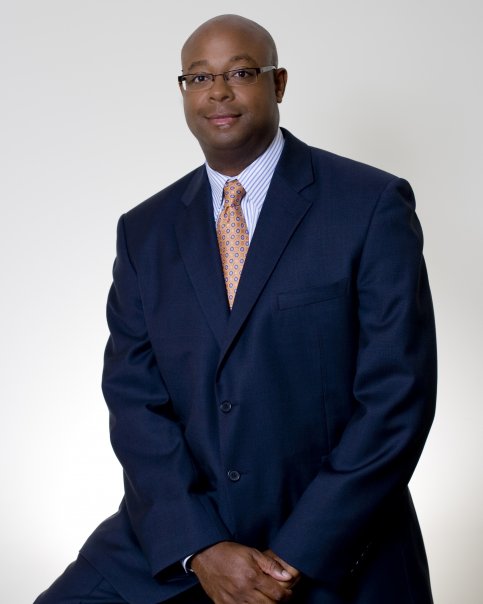
Patrick Wright
Software engineer and creator of Quotesperation. I curate wisdom from history's greatest minds to inspire and guide modern life. When I'm not collecting quotes, I'm writing about technology and finding connections between timeless wisdom and today's challenges.