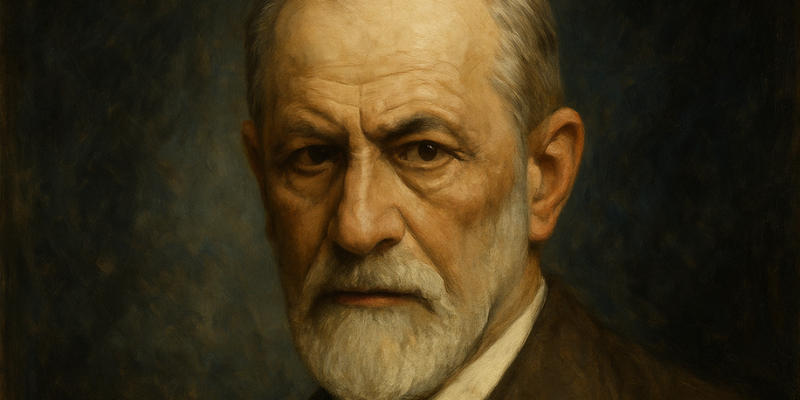
150 Best Quotes by Sigmund Freud: Insights from the Father of Psychoanalysis
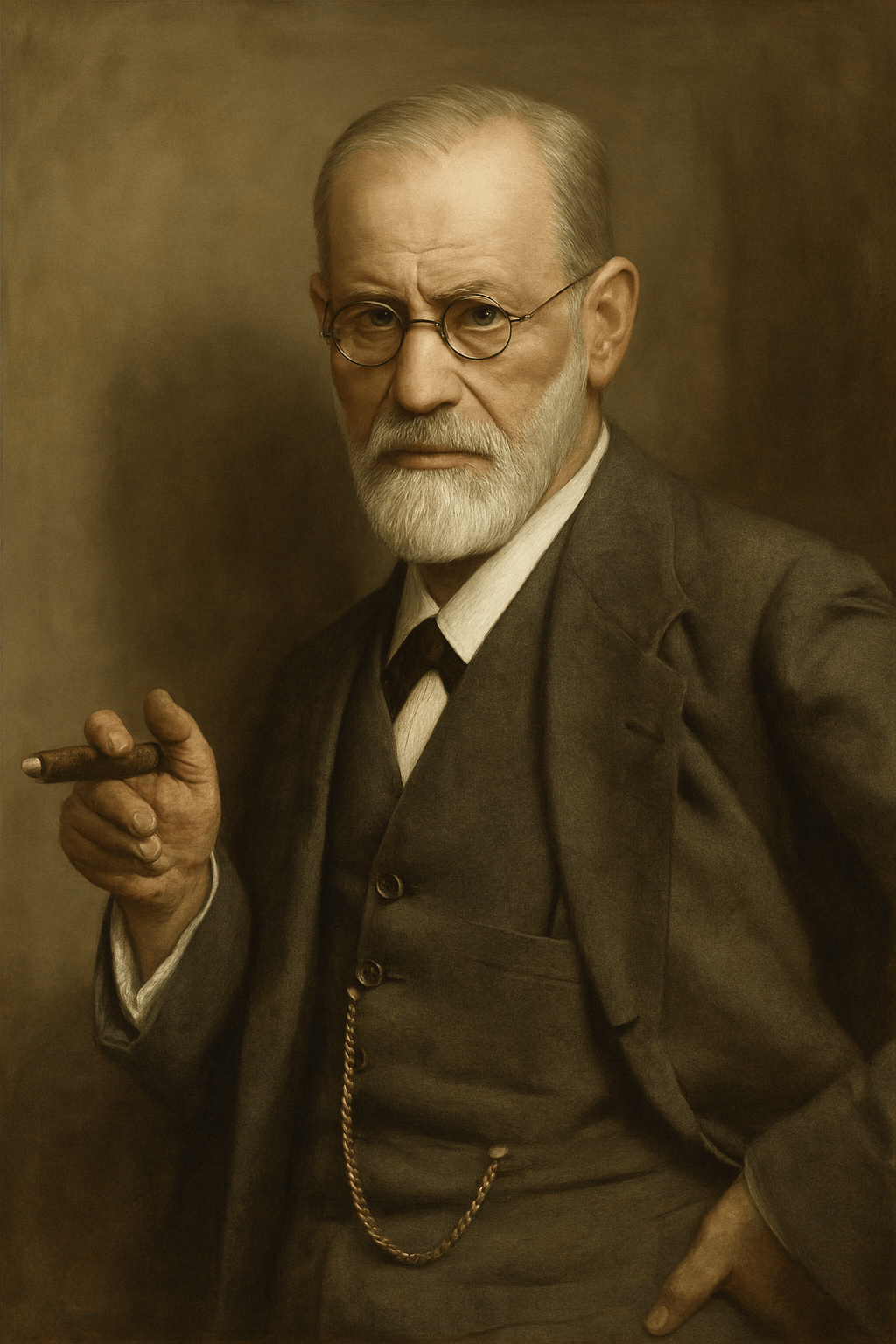
150 Best Quotes by Sigmund Freud: Insights from the Father of Psychoanalysis
Introduction
Sigmund Freud (1856-1939) revolutionized our understanding of the human mind and forever changed how we think about ourselves. As the founding father of psychoanalysis, Freud introduced groundbreaking concepts that continue to influence psychology, philosophy, literature, and popular culture today. His theories about the unconscious mind, dream interpretation, and the role of sexuality in human development sparked both admiration and controversy.
Born in Freiberg, Moravia (now the Czech Republic), Freud spent most of his life in Vienna, where he developed his revolutionary theories about the human psyche. His work explored the deepest recesses of human nature, uncovering the hidden motivations, desires, and conflicts that shape our behavior. Through his clinical practice and extensive writings, Freud gave us a new vocabulary for understanding ourselves: the id, ego, and superego; the Oedipus complex; defense mechanisms; and the talking cure.
This collection of 150 quotes represents the breadth and depth of Freud's thinking, offering insights into love, religion, society, the unconscious mind, human nature, and the challenges of existence. Whether you agree with his theories or not, Freud's observations about the human condition remain thought-provoking and relevant more than 80 years after his death.
Table of Contents
- The Unconscious Mind and Dreams
- Human Nature and Psychology
- Love and Relationships
- Religion and Illusion
- Society and Civilization
- Life, Death, and Suffering
- Freedom, Responsibility, and Ethics
- Science, Knowledge, and Truth
Section 1: The Unconscious Mind and Dreams
Freud's most revolutionary contribution was his exploration of the unconscious mind. He believed that our conscious thoughts represent only the tip of the iceberg, with vast psychological processes occurring beneath our awareness.
"The interpretation of Dreams is the royal road to a knowledge of the unconscious activities of the mind" - Sigmund Freud
"Dreams are the royal road to the unconscious." - Sigmund Freud
"Properly speaking, the unconscious is the real psychic; its inner nature is just as unknown to us as the reality of the external world, and it is just as imperfectly reported to us through the data of consciousness as is the external world through the indications of our sensory organs." - Sigmund Freud
"Where does a thought go when it's forgotten?" - Sigmund Freud
"Unexpressed emotions will never die. They are buried alive and will come forth later in uglier ways." - Sigmund Freud
"The mind is like an iceberg, it floats with one-seventh of its bulk above water." - Sigmund Freud
"The conscious mind may be compared to a fountain playing in the sun and falling back into the great subterranean pool of subconscious from which it rises." - Sigmund Freud
"Dreams are often most profound when they seem the most crazy." - Sigmund Freud
"The dream is the liberation of the spirit from the pressure of external nature, a detachment of the soul from the fetters of matter." - Sigmund Freud
"Nous avons eu l'impression que la formation des rêves obscurs se déroulait comme si une personne qui dépend d'une deuxième avait à exprimer quelque chose qui ne peut qu'être désagréable à entendre par cette dernière et c'est en se fondant sur cette comparaison que nous avons appréhendé la notion de déformation du rêve et la notion de censure." - Sigmund Freud
"The interpretation of dreams is the via regia to a knowledge of the unconscious element in our psychic life." - Sigmund Freud
"Dreams are the guardians of sleep and not its disturbers." - Sigmund Freud
"Obviously one must hold oneself responsible for the evil impulses of one's dreams. In what other way can one deal with them? Unless the content of the dream rightly understood is inspired by alien spirits, it is part of my own being." - Sigmund Freud
"The dream acts as a safety-valve for the over-burdened brain." - Sigmund Freud
"Dreams are constructed from the residue of yesterday." - Sigmund Freud
"The dream is a fragment of involuntary psychic activity." - Sigmund Freud
"In the depths of my heart I can't help being convinced that my dear fellow-men, with a few exceptions, are worthless." - Sigmund Freud
"The unconscious of one human being can react upon that of another without passing through the conscious." - Sigmund Freud
Section 2: Human Nature and Psychology
Freud's observations about human nature reveal both the complexity and contradictions inherent in the human psyche. His insights continue to resonate with our understanding of behavior and motivation.
"Most people do not really want freedom, because freedom involves responsibility, and most people are frightened of responsibility." - Sigmund Freud
"The behavior of a human being in sexual matters is often a prototype for the whole of his other modes of reaction in life." - Sigmund Freud
"Public self is a conditioned construct of the inner psychological self." - Sigmund Freud
"Human beings are funny. They long to be with the person they love but refuse to admit openly. Some are afraid to show even the slightest sign of affection because of fear. Fear that their feelings may not be recognized, or even worst, returned. But one thing about human beings puzzles me the most is their conscious effort to be connected with the object of their affection even if it kills them slowly within." - Sigmund Freud
"The virtuous man contents himself with dreaming that which the wicked man does in actual life." - Sigmund Freud
"Neurotics complain of their illness, but they make the most of it, and when it comes to taking it away from them they will defend it like a lioness her young." - Sigmund Freud
"No neurotic harbors thoughts of suicide which are not murderous impulses against others redirected upon himself." - Sigmund Freud
"The ego is not master in its own house." - Sigmund Freud
"Being entirely honest with oneself is a good exercise." - Sigmund Freud
"Out of your vulnerabilities will come your strength." - Sigmund Freud
"We are what we are because we have been what we have been." - Sigmund Freud
"The madman is a dreamer awake." - Sigmund Freud
"Neurosis is the inability to tolerate ambiguity." - Sigmund Freud
"The first human who hurled an insult instead of a stone was the founder of civilization." - Sigmund Freud
"He that has eyes to see and ears to hear may convince himself that no mortal can keep a secret. If his lips are silent, he chatters with his fingertips; betrayal oozes out of him at every pore." - Sigmund Freud
"It is impossible to overlook the extent to which civilization is built upon a renunciation of instinct." - Sigmund Freud
"The great question that has never been answered, and which I have not yet been able to answer, despite my thirty years of research into the feminine soul, is 'What does a woman want?'" - Sigmund Freud
"Men are more moral than they think and far more immoral than they can imagine." - Sigmund Freud
Section 3: Love and Relationships
Freud's insights into love and relationships reveal the complex interplay between desire, vulnerability, and human connection.
"Whoever loves becomes humble. Those who love have, so to speak, pawned a part of their narcissism." - Sigmund Freud
"It is that we are never so defenseless against suffering as when we love, never so helplessly unhappy as when we have lost our loved object or its love." - Sigmund Freud
"A woman should soften but not weaken a man." - Sigmund Freud
"Dogs love their friends and bite their enemies, quite unlike people, who are incapable of pure love and always have to mix love and hate." - Sigmund Freud
"My love is something valuable to me which I ought not to throw away without reflection." - Sigmund Freud
"Instinct of love toward an object demands a mastery to obtain it, and if a person feels they can't control the object or feel threatened by it, they act negatively toward it." - Sigmund Freud
"All family life is organized around the most damaged person in it." - Sigmund Freud
"A man's heterosexuality will not put up with any homosexuality, and vice versa." - Sigmund Freud
"The woman who refuses to see her sexual organs as mere wood chips, designed to make the man's life more comfortable, is in danger of becoming a lesbian--an active, phallic woman, an intellectual virago with a fire of her own.... The lesbian body is a particularly pernicious and depraved version of the female body in general; it is susceptible to auto-eroticism, clitoral pleasure and self-actualization." - Sigmund Freud
"We are never so defenseless against suffering as when we love." - Sigmund Freud
"In the last analysis, the entire field of psychology may reduce to biological electrochemistry." - Sigmund Freud
"A love that does not discriminate seems to me to forfeit a part of its own value, by doing an injustice to its object." - Sigmund Freud
"The finding of an object is in fact a re-finding." - Sigmund Freud
"When a love-relationship is at its height there is no room left for any interest in the environment; a pair of lovers are sufficient to themselves." - Sigmund Freud
"The sexual life of adult women is a 'dark continent' for psychology." - Sigmund Freud
"I cannot think of any need in childhood as strong as the need for a father's protection." - Sigmund Freud
"A man who has been the indisputable favorite of his mother keeps for life the feeling of a conqueror." - Sigmund Freud
"The psychoanalysis of neurotics has taught us to recognize the intimate connection between wetting the bed and the character trait of ambition." - Sigmund Freud
Section 4: Religion and Illusion
Freud's critique of religion was one of his most controversial contributions, viewing religious belief as a collective neurosis and wish-fulfillment.
"Religion is an illusion and it derives its strength from the fact that it falls in with our instinctual desires." - Sigmund Freud
"A religion, even if it calls itself a religion of love, must be hard and unloving to those who do not belong to it." - Sigmund Freud
"Where questions of religion are concerned, people are guilty of every possible sort of dishonesty and intellectual misdemeanor." - Sigmund Freud
"It would be very nice if there were a God who created the world and was a benevolent providence, and if there were a moral order in the universe and an after-life; but it is a very striking fact that all this is exactly as we are bound to wish it to be." - Sigmund Freud
"I can imagine that the oceanic feeling could become connected with religion later on. That feeling of oneness with the universe which is its ideational content sounds very like a first attempt at the consolations of religion, like another way taken by the ego of denying the dangers it sees threatening it in the external world." - Sigmund Freud
"Perhaps the hopes I have confessed to are of an illusory nature, too. But I hold fast to one distinction. Apart from the fact that no penalty is imposed for not sharing them, my illusions are not, like religious ones, incapable of correction." - Sigmund Freud
"Thus we arrive at the singular conclusion that of all the information passed by our cultural assets it is precisely the elements which might be of the greatest importance to us and which have the task of solving the riddles of the universe and of reconciling us to the sufferings of life -- it is precisely those elements that are the least well authenticated of any." - Sigmund Freud
"It is asking a great deal of a man, who has learnt to regulate his everyday affairs in accordance with the rules of experience and with due regard to reality, that he should entrust precisely what affects him most nearly to the care of an authority which claims as its prerogative freedom from all the rules of rational thought." - Sigmund Freud
"Religious doctrines are all illusions, they do not admit of proof, and no one can be compelled to consider them as true or to believe in them." - Sigmund Freud
"The whole thing is so patently infantile, so foreign to reality, that to anyone with a friendly attitude to humanity it is painful to think that the great majority of mortals will never be able to rise above this view of life." - Sigmund Freud
"Religion is a system of wishful illusions together with a disavowal of reality." - Sigmund Freud
"The religions of mankind must be classed among the mass-delusions of this kind. No one, needless to say, who shares a delusion ever recognizes it as such." - Sigmund Freud
"When a man has once brought himself to accept uncritically all the absurdities that religious doctrines put before him and even to overlook the contradictions between them, we need not be greatly surprised at the weakness of his intellect." - Sigmund Freud
"Religion is comparable to a childhood neurosis." - Sigmund Freud
"Religious ideas have sprung from the same need as all the other achievements of culture: from the necessity for defending itself against the crushing supremacy of nature." - Sigmund Freud
"The more the fruits of knowledge become accessible to men, the more widespread is the decline of religious belief." - Sigmund Freud
"Devout believers are safeguarded in a high degree against the risk of certain neurotic illnesses; their acceptance of the universal neurosis spares them the task of constructing a personal one." - Sigmund Freud
"Religion is an attempt to get control over the sensory world, in which we are placed, by means of the wish-world, which we have developed inside us as a result of biological and psychological necessities." - Sigmund Freud
Section 5: Society and Civilization
Freud's analysis of society and civilization reveals the tensions between individual desires and collective needs.
"It is impossible to escape the impression that people commonly use false standards of measurement — that they seek power, success and wealth for themselves and admire them in others, and that they underestimate what is of true value in life." - Sigmund Freud
"Civilized society is perpetually menaced with disintegration through this primary hostility of men towards one another." - Sigmund Freud
"The fateful question for the human species seems to me to be whether and to what extent their cultural development will succeed in mastering the disturbance of their communal life by the human instinct of aggression and self-destruction." - Sigmund Freud
"...we cannot fail to recognise the influence which the progressive control over natural forces exerts on the social relationships between men, since men always place their newly won powers at the service of their aggressiveness, and use them against one another." - Sigmund Freud
"America is the most grandiose experiment the world has seen, but, I am afraid, it is not going to be a success." - Sigmund Freud
"In his fight against the powers of the surrounding world his first weapon was magic, the first forerunner of our modern technology. We suppose that this confidence in magic is derived from the over-estimation of the individual's own intellectual operations, from the belief in the 'omnipotence of thoughts', which, incidentally, we come across again in our obsessional neurotics." - Sigmund Freud
"Civilization began the first time an angry person cast a word instead of a rock." - Sigmund Freud
"It goes without saying that a civilization which leaves so large a number of its participants unsatisfied and drives them into revolt neither has nor deserves the prospect of a lasting existence." - Sigmund Freud
"The liberty of the individual is no gift of civilization. It was greatest before there was any civilization." - Sigmund Freud
"What progress we are making. In the Middle Ages they would have burned me. Now they are content with burning my books." - Sigmund Freud
"The first requisite of civilization is that of justice." - Sigmund Freud
"Civilization is a process in the service of Eros, whose purpose is to combine single human individuals, and after that families, then races, peoples and nations, into one great unity, the unity of mankind." - Sigmund Freud
"Human life in common is only made possible when a majority comes together which is stronger than any separate individual and which remains united against all separate individuals." - Sigmund Freud
"The tendency to aggression is an innate, independent, instinctual disposition in man... it constitutes the greatest impediment to civilization." - Sigmund Freud
"It is always possible to bind together a considerable number of people in love, so long as there are other people left over to receive the manifestations of their aggressiveness." - Sigmund Freud
"Groups take refuge in a shared illusion to escape a painful reality." - Sigmund Freud
"The communal life of human beings had, therefore, a two-fold foundation: the compulsion to work, which was created by external necessity, and the power of love." - Sigmund Freud
"The price we pay for our advance in civilization is a loss of happiness through the heightening of the sense of guilt." - Sigmund Freud
Section 6: Life, Death, and Suffering
Freud's reflections on the human condition acknowledge the inevitability of suffering while seeking understanding and meaning.
"The intention that man should be happy is not in the plan of Creation." - Sigmund Freud
"We are threatened with suffering from three directions: from our body, which is doomed to decay..., from the external world which may rage against us with overwhelming and merciless force of destruction, and finally from our relations with other men... This last source is perhaps more painful to use than any other." - Sigmund Freud
"Experience teaches us that the world is not a nursery." - Sigmund Freud
"One day, in retrospect, the years of struggle will strike you as the most beautiful." - Sigmund Freud
"Happiness is the belated fulfilment of a prehistoric wish. For this reason wealth brings so little happiness. Money was not a childhood wish." - Sigmund Freud
"The goal of all life is death." - Sigmund Freud
"Life, as we find it, is too hard for us; it brings us too many pains, disappointments and impossible tasks." - Sigmund Freud
"A certain degree of neurosis is of inestimable value as a drive, especially to a psychologist." - Sigmund Freud
"The voice of the intellect is a soft one, but it does not rest until it has gained a hearing." - Sigmund Freud
"Words have a magical power. They can bring either the greatest happiness or deepest despair." - Sigmund Freud
"From error to error one discovers the entire truth." - Sigmund Freud
"Time spent with cats is never wasted." - Sigmund Freud
"Sometimes a cigar is just a cigar." - Sigmund Freud
"I have found little that is 'good' about human beings on the whole. In my experience most of them are trash." - Sigmund Freud
"The moment a man questions the meaning and value of life, he is sick, since objectively neither has any existence." - Sigmund Freud
"We must reckon with the possibility that something in the nature of the sexual instinct itself is unfavorable to the realization of complete satisfaction." - Sigmund Freud
"Beauty has no obvious use; nor is there any clear cultural necessity for it. Yet civilization could not do without it." - Sigmund Freud
"Flowers are restful to look at. They have neither emotions nor conflicts." - Sigmund Freud
Section 7: Freedom, Responsibility, and Ethics
Freud's thoughts on ethics and responsibility reveal the complex relationship between individual freedom and moral obligation.
"Conscience is the internal perception of the rejection of a particular wish operating in us." - Sigmund Freud
"In this situation, what we call natural ethics has nothing to offer but the narcissistic satisfaction of being able to think one is better than others. This is where ethics based on religion enters the scene with its promises of a better life hereafter. I am inclined to think that, for as long as virtue goes unrewarded here below, ethics will preach in vain." - Sigmund Freud
"Least of all should the artist be held responsible for the fate which befalls his works." - Sigmund Freud
"Analysis does not set out to make pathological reactions impossible, but to give the patient's ego freedom to decide one way or another." - Sigmund Freud
"The doctor should be opaque to his patients and, like a mirror, should show them nothing but what is shown to him." - Sigmund Freud
"Nothing that is mentally our own can ever be lost." - Sigmund Freud
"Immorality, no less than morality, has at all times found support in religion." - Sigmund Freud
"The psychical, whatever its nature may be, is itself unconscious." - Sigmund Freud
"What we call happiness in the strictest sense comes from the (preferably sudden) satisfaction of needs which have been dammed up to a high degree." - Sigmund Freud
"Just as no one can be forced into belief, so no one can be forced into unbelief." - Sigmund Freud
"Everywhere I go I find a poet has been there before me." - Sigmund Freud
"Opposition is not necessarily enmity; it is merely misused and made an occasion for enmity." - Sigmund Freud
"He who knows how to wait need make no concessions." - Sigmund Freud
"It is a mistake to believe that a science consists in nothing but conclusively proved propositions, and it is unjust to demand that it should." - Sigmund Freud
"Analogies, it is true, decide nothing, but they can make one feel more at home." - Sigmund Freud
"Every normal person, in fact, is only normal on the average. His ego approximates to that of the psychotic in some part or other and to a greater or lesser extent." - Sigmund Freud
"I have not the courage to rise up before my fellow-men as a prophet, and I bow to their reproach that I can offer them no consolation." - Sigmund Freud
"The weakness of my position does not imply a strengthening of yours." - Sigmund Freud
Section 8: Science, Knowledge, and Truth
Freud's commitment to scientific inquiry and his belief in the power of reason shine through in these reflections on knowledge and truth.
"No, our science is no illusion. But an illusion it would be to suppose that what science cannot give us we can get elsewhere." - Sigmund Freud
"We believe that it is possible for scientific work to gain some knowledge about the reality of the world, by means of which we can increase out power and in accordance with which we can arrange our life. If this belief is an illusion, then we are in the same position as you. But science has given us evidence by its numerous and important successes that it is no illusion." - Sigmund Freud
"As regards intellectual work it remains a fact, indeed, that great decisions in the realm of thought and momentous discoveries and solutions of problems are only possible to an individual, working in solitude." - Sigmund Freud
"...our philosophy has preserved essential traits of animistic modes of thought such as the over-estimation of the magic of words and the belief that real processes in the external world follow the lines laid down by our thoughts." - Sigmund Freud
"Illusions commend themselves to us because they save us pain and allow us to enjoy pleasure instead. We must therefore accept it without complaint when they sometimes collide with a bit of reality against which they are dashed to pieces." - Sigmund Freud
"The poets and philosophers before me discovered the unconscious; what I discovered was the scientific method by which the unconscious can be studied." - Sigmund Freud
"If one attempts to assign to religion its place in man's evolution, it seems not so much to be a lasting acquisition, as a parallel to the neurosis which the civilized individual must pass through on his way from childhood to maturity." - Sigmund Freud
"Thought is action in rehearsal." - Sigmund Freud
"The mind is a wonderful thing. It starts working the moment you are born and never stops until you stand up to speak in public." - Sigmund Freud
"It might be said of psychoanalysis that if you give it your little finger it will soon have your whole hand." - Sigmund Freud
"In matters of sexuality we are at present, every one of us, ill or well, nothing but hypocrites." - Sigmund Freud
"Psychoanalysis is in essence a cure through love." - Sigmund Freud
"The psychoanalysis of individual human beings, however, teaches us with quite special insistence that the god of each of them is formed in the likeness of his father." - Sigmund Freud
"The creative writer does the same as the child at play; he creates a world of fantasy which he takes very seriously." - Sigmund Freud
"Anatomy is destiny." - Sigmund Freud
"When one does not have what one wants, one must want what one has." - Sigmund Freud
Conclusion
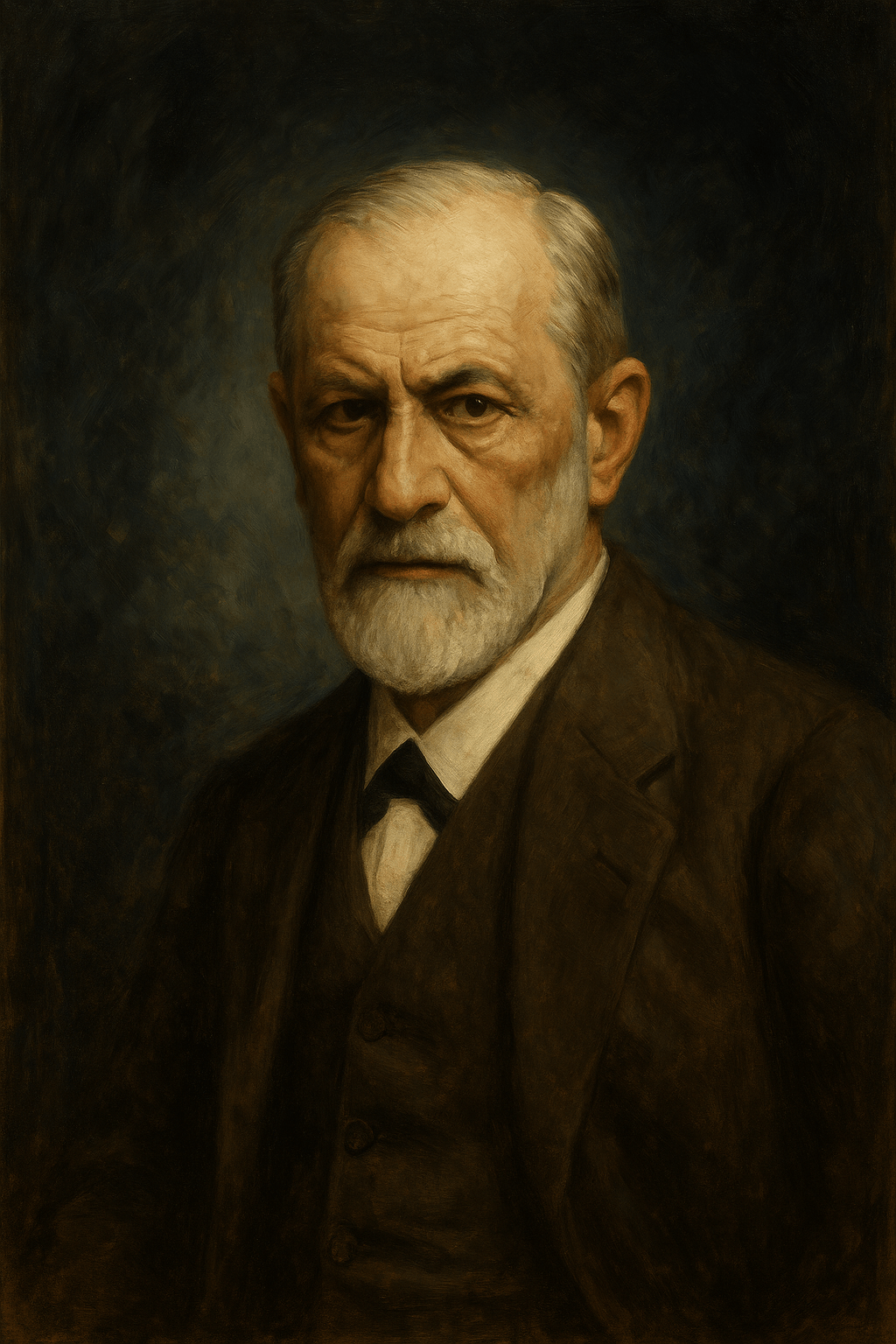
Sigmund Freud's legacy extends far beyond the field of psychology. His revolutionary ideas about the unconscious mind, the interpretation of dreams, and the hidden motivations behind human behavior have profoundly influenced how we understand ourselves and our place in the world. While many of his specific theories have been challenged or revised by subsequent research, his fundamental insight—that much of mental life occurs outside conscious awareness—remains a cornerstone of modern psychology.
These 150 quotes reveal a thinker who was unafraid to challenge conventional wisdom and explore the darker aspects of human nature. Freud's observations about religion, society, love, and the human condition continue to provoke thought and debate. Whether discussing the illusions that comfort us, the suffering inherent in existence, or the complex dynamics of human relationships, Freud's words retain their power to illuminate and disturb.
Perhaps most importantly, Freud's work reminds us that self-knowledge is both difficult and essential. His famous dictum that "the unexamined life is not worth living" echoes through these quotes, challenging us to look beneath the surface of our conscious thoughts and confront the deeper truths of our psyche. In an age of quick fixes and surface solutions, Freud's emphasis on the complexity of the human mind and the importance of understanding our unconscious motivations remains more relevant than ever.
As we continue to grapple with questions of identity, meaning, and mental health in the 21st century, Freud's insights serve as both a foundation and a provocation. His legacy lies not in having all the answers, but in asking the right questions—questions that continue to shape our understanding of what it means to be human.
Explore Quote Collections

Books & Knowledge
Explore the best quotes about the power of reading, the magic of libraries, book collecting, literary wisdom, and the timeless bond between reader and author.

Friendship
Explore the best friendship quotes about true friends, loyalty, trust, betrayal, love, and lifelong bonds. Browse curated quote collections by theme.

Life
Explore the deepest questions of existence. A curated collection of quotes on the journey of life, the pursuit of wisdom, the beauty of struggle, and the acceptance of mortality.
Persistence & Progress
Discover the power of steady progress. Explore curated quotes on overcoming challenges, simplifying complex problems, staying focused, and the art of getting things done.
You Might Also Like

Patrick Wright
Software engineer and creator of Quotesperation. I curate wisdom from history's greatest minds to inspire and guide modern life. When I'm not collecting quotes, I'm writing about technology and finding connections between timeless wisdom and today's challenges.