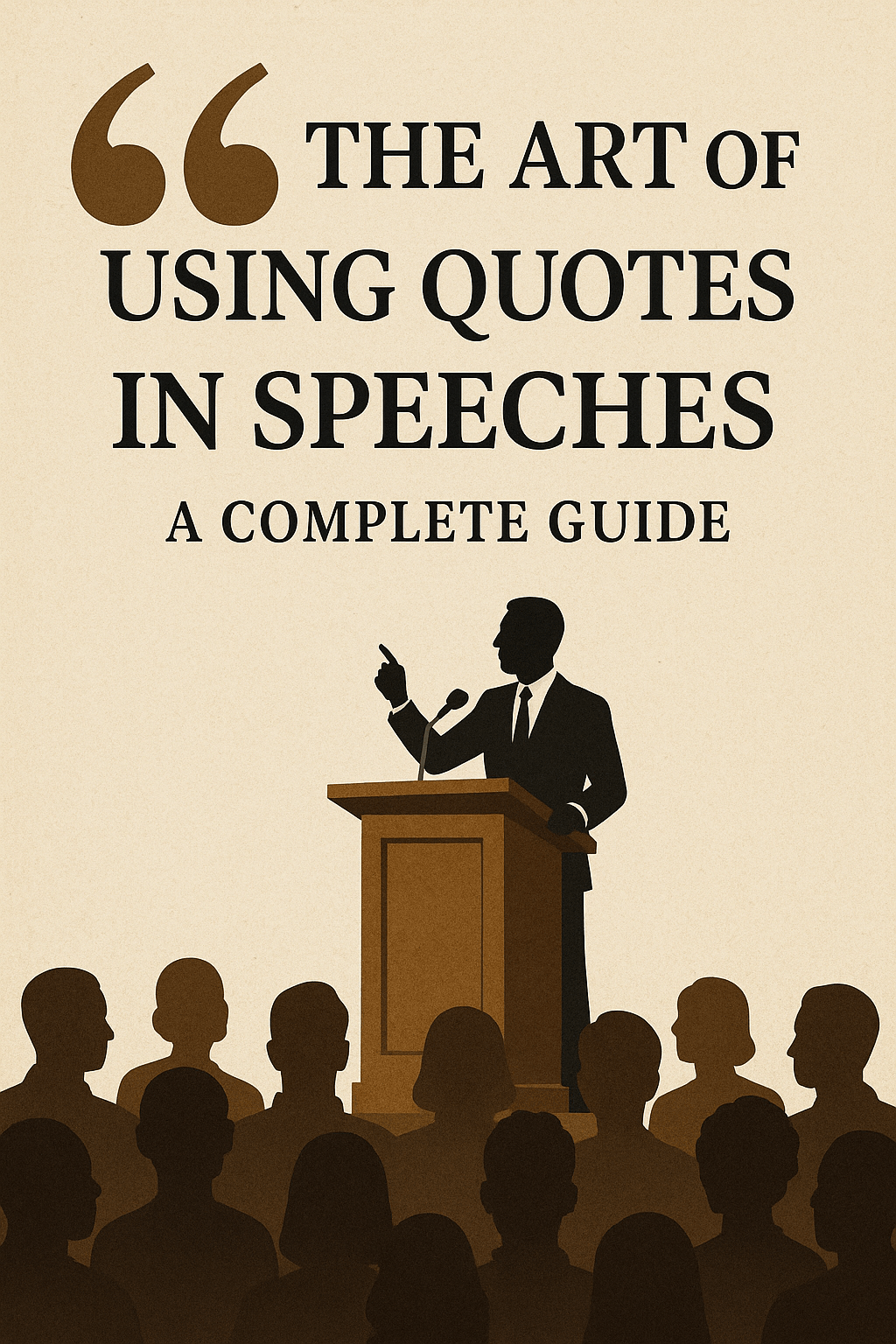
The Art of Using Quotes in Speeches: A Complete Guide
Introduction
Throughout history, the most memorable speeches have shared a common element: the strategic use of powerful quotations. From Winston Churchill's wartime addresses drawing upon Shakespeare to Martin Luther King Jr.'s "I Have a Dream" speech weaving together biblical references and American founding principles, great orators understand that quotes serve as bridges between their message and the collective wisdom of humanity.
A well-chosen quote can transform an ordinary speech into an extraordinary one. It can lend authority to your arguments, provide emotional resonance, offer universal truths that transcend cultural boundaries, and create moments of recognition where audiences connect deeply with your message. However, using quotes effectively requires more than simply inserting famous sayings into your text. It demands thoughtful selection, seamless integration, and strategic placement to enhance rather than distract from your core message.
This comprehensive guide will equip you with the knowledge and techniques needed to master the art of using quotes in speeches, whether you're delivering a business presentation, wedding toast, graduation address, or any other speaking engagement.
Understanding the Power of Quotations
Quotations serve multiple psychological and rhetorical functions in speeches. They act as cognitive shortcuts, allowing speakers to tap into pre-existing associations and emotions that audiences already hold. When you quote Abraham Lincoln, you're not just sharing his words—you're invoking his credibility, wisdom, and the historical weight of his presidency. This phenomenon, known as "borrowed ethos," allows speakers to enhance their own credibility by association with respected figures.
Quotes also provide emotional anchoring points in speeches. They can serve as moments of reflection, inspiration, humor, or gravitas, depending on your needs. A humorous quote from Mark Twain might lighten the mood during a tense business presentation, while a profound statement from Maya Angelou could add depth to a graduation speech about overcoming challenges.
Furthermore, quotations create shared cultural touchstones. When you reference widely known sayings or literary passages, you're creating moments of collective recognition that can unify diverse audiences around common human experiences and values.
Types of Quotes and Their Strategic Uses
Literary Quotations
Literary quotes draw from the rich tradition of poetry, novels, and plays. These often carry emotional depth and artistic beauty that can elevate the aesthetic quality of your speech. Shakespeare's works, for instance, contain countless gems applicable to modern situations. "To be or not to be" might introduce a discussion about difficult choices, while "All the world's a stage" could frame a speech about life's different phases.
Poetry offers particularly powerful options for emotional moments. Maya Angelou's "Still I Rise" provides inspiring language for overcoming adversity, while Robert Frost's "The Road Not Taken" speaks to making difficult choices. When using literary quotes, consider your audience's familiarity with the source and be prepared to provide brief context if necessary.
Historical Quotations
Historical quotes carry the weight of momentous occasions and proven leadership. They're particularly effective in speeches about change, leadership, or overcoming challenges. Franklin D. Roosevelt's "The only thing we have to fear is fear itself" remains powerful for addressing uncertainty, while John F. Kennedy's "Ask not what your country can do for you" can inspire civic responsibility.
When using historical quotes, ensure they align with your message and audience values. Be mindful of the full context of historical figures, as audiences may have complex feelings about certain leaders based on contemporary understanding of their complete legacy.
Contemporary Quotations
Modern quotes from business leaders, celebrities, athletes, or other public figures can feel more relatable and current. Steve Jobs' thoughts on innovation, Oprah Winfrey's insights on personal growth, or athletes' comments about perseverance can resonate strongly with contemporary audiences.
The advantage of contemporary quotes is their immediacy and relevance to current experiences. However, be cautious about using quotes from figures who might become controversial or whose reputations might change over time.
Philosophical and Religious Quotations
Philosophical and religious quotes can provide profound depth to speeches, but they require careful consideration of your audience's beliefs and values. Ancient philosophers like Aristotle, Confucius, or Marcus Aurelius offer timeless wisdom that often transcends specific religious boundaries. Religious quotes should generally be used only when appropriate to your audience and context, but they can be incredibly powerful when suitable.
Anonymous and Proverb Quotations
Sometimes the most effective quotes come from anonymous sources or traditional proverbs. "A journey of a thousand miles begins with a single step" doesn't lose its power because we're uncertain of its exact origin. These quotes often feel accessible and universal because they're not associated with specific individuals who might carry particular baggage for some audience members.
Strategic Placement: When and Where to Use Quotes
Opening Hooks
A powerful quote can serve as an excellent opening hook, immediately capturing attention and setting the tone for your entire speech. The key is choosing something that directly relates to your main theme while being engaging enough to draw listeners in. For example, opening a speech about innovation with Thomas Edison's "Genius is one percent inspiration and ninety-nine percent perspiration" immediately establishes both your topic and your perspective on it.
When using quotes as openers, avoid overused sayings that might feel clichéd. Instead, look for lesser-known quotes from well-known figures, or surprising quotes that challenge common assumptions about your topic.
Transition Points
Quotes can serve as elegant bridges between different sections of your speech. They provide natural pause points that allow audiences to process what they've heard while preparing them for what's coming next. A quote about perseverance might transition perfectly from discussing challenges to outlining solutions.
Supporting Evidence
When making arguments, quotes can serve as expert testimony that supports your points. A business leader's insights about teamwork can strengthen your argument about collaboration, while a scientist's observations about curiosity can support your points about innovation. The key is ensuring the quote genuinely supports your argument rather than simply decorating it.
Emotional Peaks
Strategic placement of quotes during emotional high points can amplify their impact significantly. A stirring quote about courage placed at the climax of a speech about overcoming adversity will resonate far more powerfully than the same quote used casually in the middle of routine content.
Memorable Conclusions
Ending with a quote can provide a satisfying sense of closure while giving your audience something memorable to take away. The best concluding quotes either summarize your main message or challenge your audience to action. Martin Luther King Jr.'s speeches often ended with quotes or references that both encapsulated his message and called for continued commitment to his cause.
Finding the Right Quotes
Research Strategies
Effective quote selection begins with thorough research. Start by identifying key themes in your speech, then search for quotes that illuminate those themes from different angles. Online quote databases, books of quotations, and speech collections can provide starting points, but don't stop there.
Read biographies, autobiographies, and speeches by relevant figures. Often the most powerful quotes aren't the famous one-liners but deeper insights buried in longer works. A CEO's thoughts on failure from a lengthy interview might be more impactful than their well-known quotes about success.
Relevance and Authenticity
The most important criterion for quote selection is relevance to your message and audience. A quote might be beautiful and inspiring, but if it doesn't clearly connect to your speech's purpose, it becomes a distraction. Similarly, ensure quotes feel authentic to your speaking style and personality. If you're naturally casual and conversational, overly formal or archaic quotes might feel forced.
Verification and Attribution
Always verify the accuracy of quotes and their attribution. The internet is filled with misattributed quotes, and using an incorrectly attributed quote can damage your credibility. When in doubt, trace quotes back to their original sources. This research often reveals interesting context that can enhance your use of the quote.
Cultural Sensitivity
Consider your audience's cultural background and potential sensitivities when selecting quotes. What resonates in one cultural context might be meaningless or even offensive in another. Similarly, be mindful of quotes from figures who might be controversial for portions of your audience.
Integration Techniques: Making Quotes Flow Naturally
Seamless Incorporation
The best speeches make quotes feel like natural parts of the narrative rather than forced insertions. This requires smooth transitions that connect your thoughts to the quoted material. Instead of abruptly saying "As Winston Churchill once said," try something like "This reminds me of Winston Churchill's observation that..." or "Churchill captured this sentiment perfectly when he noted that..."
Providing Context
While you don't want to bog down your speech with lengthy explanations, providing brief context for quotes helps audiences understand their significance. "Speaking during World War II, Churchill reminded us that..." or "Reflecting on her experiences growing up in the segregated South, Maya Angelou wrote..." gives listeners the framework they need to fully appreciate the quote's relevance.
Paraphrasing vs. Direct Quotation
Sometimes paraphrasing serves your purpose better than direct quotation. Paraphrasing allows you to capture the essence of someone's insight while adapting the language to fit your speech's style and flow. However, when the exact wording is particularly powerful or when you want to invoke the specific authority of the source, direct quotation is more effective.
Building Upon Quotes
Don't let quotes stand alone—build upon them to show how they relate to your specific message. After sharing a quote, explain what it means to you, how it applies to your audience's situation, or why it's particularly relevant to your topic. This technique transforms quotes from mere decoration into integral parts of your argument.
Delivery Techniques
Vocal Emphasis
The way you deliver quotes can dramatically affect their impact. Slight changes in pace, tone, or volume can signal to your audience that something important is coming. Some speakers prefer to slow down slightly when delivering quotes, allowing each word to resonate. Others use vocal emphasis to highlight key phrases within longer quotations.
Pausing for Effect
Strategic pauses before and after quotes give audiences time to process their significance. A brief pause before introducing a quote builds anticipation, while a pause afterward allows the words to sink in before you continue with your own thoughts.
Attribution Timing
You can attribute quotes before, during, or after sharing them, each approach creating different effects. Attribution beforehand (As Maya Angelou said...) prepares the audience to hear the quote through the lens of that person's authority. Attribution afterward (... as Maya Angelou once wrote) allows the quote to stand on its own merit before revealing its source.
Common Mistakes to Avoid
Over-Quotation
One of the most common mistakes is using too many quotes, which can make speeches feel like collections of other people's thoughts rather than original presentations. A good rule of thumb is no more than one substantial quote per major point, and fewer quotes overall than many speakers instinctively want to use.
Mismatched Tone
Ensure your quotes match the overall tone of your speech. A humorous quote in the middle of a solemn memorial speech will feel jarring and inappropriate, just as an overly serious quote might deflate a lighthearted celebration.
Clichéd Selections
Overused quotes lose their power through repetition. "The only thing we have to fear is fear itself" and "Ask not what your country can do for you" are powerful statements, but they've been quoted so frequently that they might feel stale unless used in particularly creative or relevant ways.
Poor Integration
Quotes that feel randomly inserted rather than naturally integrated disrupt speech flow and distract from your message. Each quote should feel necessary and well-connected to your surrounding content.
Inaccurate Attribution
Nothing undermines credibility faster than misattributing quotes. The internet is full of quotes incorrectly attributed to famous figures. Mark Twain, Einstein, and Gandhi are particularly frequent victims of misattribution. Always verify quotes through reliable sources.
Advanced Techniques
Thematic Quote Weaving
Advanced speakers sometimes build entire speeches around extended exploration of a single quote, unpacking its various meanings and applications throughout their presentation. This technique requires careful planning but can create remarkably cohesive and powerful speeches.
Quote Conversations
Another sophisticated technique involves using quotes from different figures that seem to "converse" with each other about your topic. You might present contrasting viewpoints from different eras or show how various thinkers have built upon each other's ideas.
Personal Connection
The most powerful quote usage often involves sharing how a particular quote has personally influenced or inspired you. This technique combines the authority of the original source with your own authentic experience, creating a uniquely compelling combination.
Practical Examples and Case Studies
Consider how different speakers have masterfully used quotes in famous speeches. In his "I Have a Dream" speech, Martin Luther King Jr. wove together biblical references, constitutional principles, and literary allusions to create a tapestry that spoke to diverse audiences. He didn't simply insert quotes—he made them integral to his narrative about America's unfulfilled promises and potential.
Steve Jobs' Stanford commencement address demonstrated how personal anecdotes could be enhanced by carefully chosen quotes. His reference to "Stay hungry, stay foolish" from the Whole Earth Catalog became a defining message because he connected it to his own life story and his advice for graduates.
Business presentations often benefit from quotes that establish credibility and shared values. A presentation about customer service might open with a quote from Sam Walton about putting customers first, immediately establishing the speaker's alignment with proven business principles.
Conclusion
Mastering the use of quotes in speeches is both an art and a skill that improves with practice and intention. The most effective speakers understand that quotes are not ornaments to decorate their speeches but tools to enhance their message, build credibility, create emotional connection, and provide memorable touchstones for their audiences.
The key principles to remember are relevance, authenticity, and integration. Every quote should serve a clear purpose in advancing your speech's objectives. Each should feel natural and appropriate to your voice and your audience. And all should be woven seamlessly into your narrative rather than feeling like interruptions or afterthoughts.
Start small in your own speaking practice. Choose one or two quotes that genuinely resonate with you and your message, verify their accuracy and attribution, and practice integrating them naturally into your presentation. Pay attention to how your audience responds and adjust your approach accordingly.
Remember that the goal is not to impress audiences with your knowledge of famous quotes but to enhance their understanding and emotional connection to your message. When used skillfully, quotes become bridges between your thoughts and the accumulated wisdom of humanity, creating speeches that are both personally authentic and universally resonant.
As you develop your speaking skills, you'll discover that the best quotes often find you when you're deeply engaged with your subject matter. Stay curious, read widely, and keep a collection of quotes that speak to you personally. Over time, you'll develop an intuitive sense for when and how to use them most effectively.
The ancient Greek concept of rhetoric emphasized the importance of ethos, pathos, and logos—credibility, emotion, and logic. Skillfully used quotes can enhance all three elements, making your speeches more credible through association with respected figures, more emotional through shared human insights, and more logical through expert testimony and evidence.
Ultimately, quotes are most powerful when they feel inevitable rather than inserted, when they illuminate your message rather than overshadow it, and when they leave your audience with new insights rather than simply familiar sayings. Master these principles, and you'll find that quotes become invaluable allies in your quest to create speeches that inform, inspire, and endure in your listeners' memories long after the applause has faded.
Explore Quote Collections
Books & Knowledge
Explore the best quotes about the power of reading, the magic of libraries, book collecting, literary wisdom, and the timeless bond between reader and author.

Friendship
Explore the best friendship quotes about true friends, loyalty, trust, betrayal, love, and lifelong bonds. Browse curated quote collections by theme.

Life
Explore the deepest questions of existence. A curated collection of quotes on the journey of life, the pursuit of wisdom, the beauty of struggle, and the acceptance of mortality.
Persistence & Progress
Discover the power of steady progress. Explore curated quotes on overcoming challenges, simplifying complex problems, staying focused, and the art of getting things done.
You Might Also Like
Patrick Wright
Software engineer and creator of Quotesperation. I curate wisdom from history's greatest minds to inspire and guide modern life. When I'm not collecting quotes, I'm writing about technology and finding connections between timeless wisdom and today's challenges.