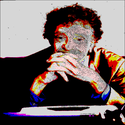
Kurt Vonnegut
Full Name and Common Aliases
Kurt Vonnegut Jr., often simply referred to as Kurt Vonnegut, was an American writer known for his satirical and darkly humorous novels. His unique voice and style have made him a beloved figure in American literature.
Birth and Death Dates
Kurt Vonnegut was born on November 11, 1922, in Indianapolis, Indiana, and he passed away on April 11, 2007, in New York City.
Nationality and Profession(s)
Vonnegut was an American novelist, short story writer, and essayist. His work often blends science fiction elements with social commentary, making him a distinctive voice in 20th-century literature.
Early Life and Background
Kurt Vonnegut Jr. was born into a family with a strong German-American heritage. His father, Kurt Vonnegut Sr., was an architect, and his mother, Edith Lieber, came from a wealthy family. The Great Depression had a significant impact on the Vonnegut family, leading to financial difficulties and affecting Kurt's upbringing. He attended Shortridge High School in Indianapolis, where he began writing for the school newspaper, laying the foundation for his future career.
Vonnegut went on to attend Cornell University, where he studied biochemistry. However, his education was interrupted by World War II. He enlisted in the U.S. Army and was deployed to Europe, where he was captured during the Battle of the Bulge. As a prisoner of war, he survived the bombing of Dresden, an experience that profoundly influenced his writing, particularly his most famous novel, "Slaughterhouse-Five."
Major Accomplishments
Kurt Vonnegut's literary career is marked by his ability to blend satire, science fiction, and social commentary. He published his first novel, "Player Piano," in 1952, which critiqued the mechanization of society. However, it was "Slaughterhouse-Five," published in 1969, that cemented his reputation as a major literary figure. The novel's anti-war message and innovative narrative structure resonated with readers and critics alike, establishing Vonnegut as a leading voice in American literature.
Throughout his career, Vonnegut received numerous accolades, including the Hugo Award for Best Novel and the Nebula Award. He was also a member of the American Academy of Arts and Letters and received honorary degrees from several universities.
Notable Works or Actions
Kurt Vonnegut's body of work includes a range of novels, short stories, and essays. Some of his most notable works include:
- "Slaughterhouse-Five": A semi-autobiographical novel that explores the horrors of war and the concept of free will through the experiences of Billy Pilgrim, a soldier who becomes "unstuck in time."
- "Cat's Cradle": A satirical novel that examines the absurdities of science, religion, and the arms race.
- "Breakfast of Champions": A metafictional exploration of the relationship between authors and their characters, as well as a critique of American culture.
Vonnegut's writing is characterized by its wit, dark humor, and deep philosophical insights, making his work both entertaining and thought-provoking.
Impact and Legacy
Kurt Vonnegut's impact on literature and culture is profound. His ability to tackle complex themes with humor and humanity has inspired countless readers and writers. Vonnegut's work often challenges societal norms and encourages readers to question authority and think critically about the world around them.
His influence extends beyond literature; Vonnegut's ideas have permeated popular culture, with references to his work appearing in films, music, and other media. His distinctive voice and perspective continue to resonate with new generations, ensuring his place as a timeless figure in American literature.
Why They Are Widely Quoted or Remembered
Kurt Vonnegut is widely quoted and remembered for his incisive observations on human nature, society, and the absurdities of life. His quotes often encapsulate complex ideas in a simple, memorable way, making them accessible and relatable to a broad audience. Vonnegut's ability to blend humor with profound insights has made his words enduringly popular, and his quotes are frequently cited in discussions on topics ranging from war and politics to the human condition.
Vonnegut's legacy as a writer who challenged conventions and provoked thought ensures that his work and words will continue to be celebrated and quoted for years to come.
Quotes by Kurt Vonnegut
Kurt Vonnegut's insights on:


Son—they say there isn't any royalty in this country, but do you want me to tell you how to be king of the United States of America? Just fall through the hole in a privy and come out smelling like a rose.

Fuller's cigar in the night was a beacon warning carefree, frivolous people away. It was plainly a cigar smoked in anger.


Here is the solution to the American drug problem suggested a couple years back by the wife of our President: 'Just say no.'


The Earthlings behaved at all times as though there were a big eye in the sky – as though that big eye were ravenous for entertainment.
